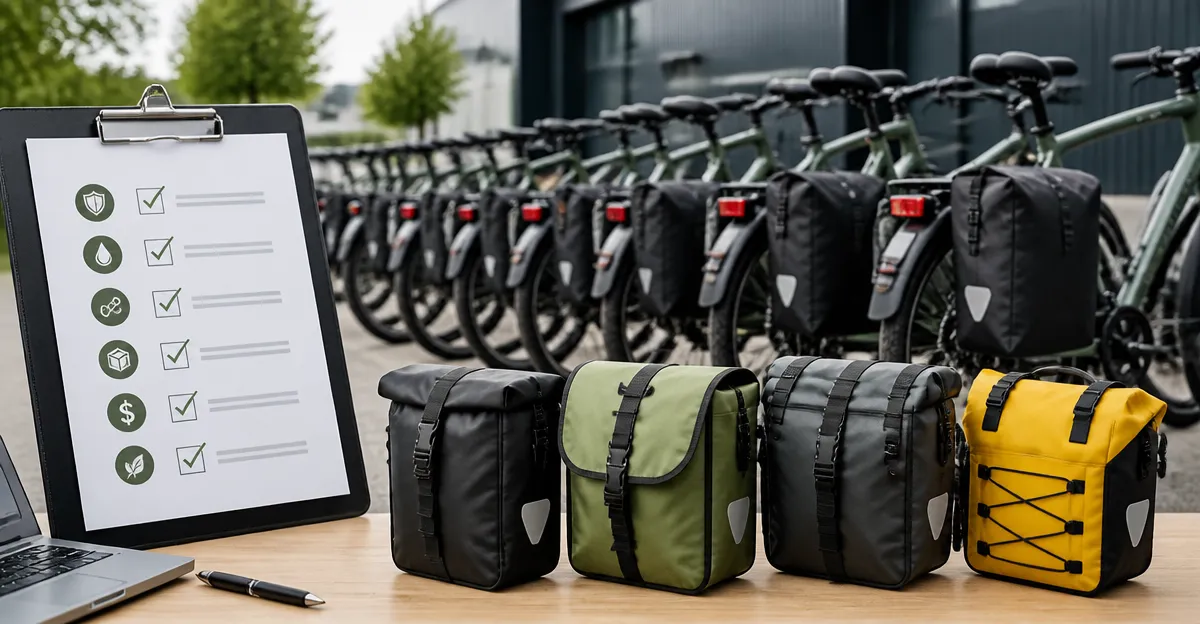
Vendors' Guide to Pannier Fleet Procurement: The Complete Checklist for Sourcing Durable, Cost‑Effective Panniers
Introduction
Organizations that manage bike fleets—whether for corporate commuting, delivery services, or tourism—must equip riders with reliable pannier solutions. This guide explains the essential criteria for selecting panniers that balance durability, weather protection, capacity, and cost. Readers will learn how to assess technical specifications, compare leading products, and implement best‑practice procurement processes.
By the end of the article, procurement officers will have a structured checklist, a side‑by‑side comparison of five market‑tested models, and actionable tips for long‑term maintenance. The information is based on real‑world user feedback and verified Amazon data, ensuring that recommendations are grounded in actual performance.
Background and Context
Bike panniers serve as the primary cargo compartment for cyclists who need to transport tools, groceries, or parcels. Unlike backpacks, panniers keep weight low and centered over the rear wheel, preserving stability and rider comfort. Modern fleets often require waterproofing, reflective safety features, and compatibility with a variety of rack designs, especially on e‑bikes where battery placement can affect mounting options.
When evaluating panniers, vendors must consider three overarching dimensions: material resilience, functional capacity, and total cost of ownership. Material resilience influences how the bag withstands rain, mud, and repeated impacts. Functional capacity determines whether the bag can hold the intended load without compromising handling. Total cost of ownership includes purchase price, expected lifespan, and any ancillary accessories such as rain covers or mounting hardware.
Understanding Pannier Requirements
Before issuing a purchase order, create a requirement matrix that captures the following items:
- Maximum load per bag (in pounds or kilograms)
- Waterproof rating (e.g., roll‑top closure, PVC coating)
- Reflective elements for night visibility
- Mounting system compatibility (standard 6‑inch rack, e‑bike battery clearance)
- Capacity in liters and compartment layout
- Price ceiling per unit
These criteria help narrow the vendor pool and provide a transparent basis for evaluation. For fleets that operate in mixed climates, waterproof performance should be weighted heavily; for urban delivery services, quick‑release mounting may be the decisive factor.
Evaluating Durability and Materials
Durability is primarily driven by fabric choice and construction technique. Heavy‑duty 600D Oxford with a PVC laminate, as found in the KEMIMOTO Bike Pannier Bag, offers robust abrasion resistance and a built‑in rain cover. In contrast, the JXFUKAL Hard Shell Bike Bag employs an EVA hard shell coated with PU, providing a rigid protective envelope that resists deformation.
Waterproofing technologies vary. Roll‑top closures, as used by the ROCKBROS Waterproof Bike Panniers, create a sealed seam that prevents water ingress even during heavy rain. The Kinetrail Waterproof Bike Panniers rely on a PU‑coated fabric and drawstring closures, offering a balance between flexibility and protection.
Reflective safety strips are essential for night operations. Both the KEMIMOTO and Kinetrail models include high‑visibility reflective trims, while the Bushwhacker Omaha bags provide reflective logos on each side, enhancing rider safety without adding bulk.
Cost‑Effectiveness and Value Analysis
Price alone does not determine value. The KEMIMOTO bag delivers a 34 L total capacity for $35.99, earning a 4.4‑star rating from 2,500 reviews, indicating strong market acceptance. The ROCKBROS set, priced at $99.99, offers a premium roll‑top system and a hard support board but carries a higher upfront cost; its 4.3‑star rating from 453 reviews suggests solid but niche appeal.
The Bushwhacker Omaha panniers cost $64.95 for a pair, providing a 15‑lb load capacity per bag and a fold‑flat design that reduces storage space when not in use. Their 4.5‑star rating from 1,032 reviews highlights reliability for grocery‑centric fleets.
The JXFUKAL Hard Shell bag, at $39.99, combines a hard shell with a 9.5 L internal volume, making it suitable for tools and small electronics. Its 4.5‑star rating from 2,012 reviews demonstrates high satisfaction relative to price.
Finally, the Kinetrail panniers, priced at $27.99, provide an expandable 25‑35 L capacity and receive a 4.6‑star rating from 41 reviews. Although the review pool is smaller, the high rating suggests good performance for budget‑conscious fleets.
Compatibility and Installation Considerations
All five products claim compatibility with standard bike racks up to 6 inches wide. However, real‑world installation can differ based on rack geometry and e‑bike battery placement. The KEMIMOTO bag includes six heavy‑duty straps and two side hooks, reducing bounce on uneven terrain. The ROCKBROS panniers feature a three‑point attachment with rotatable brackets, facilitating quick removal—a valuable trait for delivery riders who need to swap bags frequently.
The Bushwhacker Omaha bags employ a metal hook and bungee‑S‑hook system, allowing a 15‑second install and removal cycle. Their foldable design makes them ideal for fleets that alternate between cargo and passenger configurations.
The JXFUKAL bag uses two buckle straps and a Velcro strap, offering a secure fit on most rack types, while the Kinetrail model provides three quick‑release buckles and two adjustable straps, ensuring a tight seal even on high‑load trips.
Real‑World Product Recommendations
Below are specific scenarios where each product excels:
- KEMIMOTO Bike Pannier Bag – Best for high‑capacity commuter fleets needing a built‑in rain cover and reflective strip. Its 34 L total volume accommodates groceries, tools, and spare clothing.
- ROCKBROS Waterproof Bike Panniers – Ideal for long‑distance touring or delivery services that encounter severe weather. The roll‑top closure and hard interior board protect electronics and paperwork.
- Bushwhacker Omaha Bike Panniers – Perfect for urban grocery delivery where rapid installation and fold‑flat storage are priorities.
- JXFUKAL Hard Shell Bike Bag – Suited for e‑bike fleets that require a rigid protective shell for delicate equipment such as power banks or laptops.
- Kinetrail Waterproof Bike Panniers – Recommended for budget‑sensitive operations that still demand waterproofing and expandable capacity.
Comparison and Selection Guide
| Feature | KEMIMOTO (34 L) | ROCKBROS (30 L) | Bushwhacker Omaha (15 lb each) | JXFUKAL Hard Shell (9.5 L) | Kinetrail (25‑35 L) |
|---|---|---|---|---|---|
| Price (USD) | 35.99 | 99.99 | 64.95 | 39.99 | 27.99 |
| Rating | 4.4/5 (2,500) | 4.3/5 (453) | 4.5/5 (1,032) | 4.5/5 (2,012) | 4.6/5 (41) |
| Waterproof Method | 600D Oxford + PVC rain cover | Roll‑top PVC net | Water‑resistant fabric | EVA + PU shell with rain cover | PU‑coated fabric |
| Reflective Elements | Reflective strip | Night reflective logo | Reflective logo | Four‑sided reflective design | Reflective trims |
| Mounting System | 6 straps + side hooks | 3‑point quick release | Metal hooks + bungee | 2 buckles + Velcro | 3 buckles + 2 straps |
| Capacity per Bag | 17 L | 15 L | Fits one grocery bag (≈15 L) | 9.5 L | 25‑35 L (adjustable) |
Use this matrix to match fleet priorities with product strengths. For example, a delivery service that values rapid detachment should prioritize the ROCKBROS or Bushwhacker models, while a commuter program focused on maximum cargo volume may select the KEMIMOTO bag.
Best Practices & Tips for Fleet Managers
- Standardize Rack Dimensions – Verify that all bikes in the fleet share a rack width of 6 inches or less to ensure universal compatibility.
- Conduct a Weather Test – Simulate heavy rain by spraying the panniers while loaded; confirm that no moisture penetrates the interior.
- Implement a Rotation Schedule – Replace panniers after a predefined mileage (e.g., 5,000 km) or after visible wear to maintain performance.
- Secure Reflective Strips – Periodically inspect reflective tape for peeling; replace with high‑visibility tape if degradation occurs.
- Use Protective Inserts – For hard‑shell bags, add foam inserts to protect delicate electronics; for soft bags, consider a waterproof liner.
- Train Riders on Proper Loading – Distribute weight evenly across both bags and keep heavy items low to preserve bike handling.
- Maintain Documentation – Keep a spreadsheet of each bag’s purchase date, serial number (if applicable), and inspection results for audit purposes.
Frequently Asked Questions
What is the most important factor when choosing a pannier for an e‑bike?
The primary consideration is clearance for the battery and any rear‑mounted motor. Choose a model with adjustable straps or a low‑profile design, such as the KEMIMOTO or JXFUKAL, to avoid interference.
Are roll‑top closures truly waterproof?
When properly sealed, roll‑top designs create a watertight seam. The ROCKBROS panniers have been reported to keep contents dry after 400 miles of rain‑exposed touring, confirming their effectiveness.
How can a fleet ensure that panniers remain secure on bumpy roads?
Secure mounting hardware is essential. Look for multiple straps, side hooks, or quick‑release buckles that lock the bag firmly to the rack. The KEMIMOTO’s six‑strap system and Bushwhacker’s bungee‑S‑hook combination are proven solutions.
Do reflective strips degrade over time?
Yes, exposure to UV light and abrasion can reduce reflectivity. Regular inspection and replacement of worn strips extend the safety lifespan of the pannier.
Can panniers be used for temperature‑sensitive cargo?
Waterproof fabrics protect against moisture but do not provide insulation. For temperature‑sensitive items, add a removable insulated liner inside the bag.
What is the typical warranty period for these products?
Most manufacturers on Amazon offer a 1‑year limited warranty covering material defects. Verify the specific warranty terms on the product page before purchase.
Is it advisable to mix different pannier brands on the same bike?
Mixing brands is acceptable if both bags share compatible mounting systems. However, uniformity simplifies inventory management and ensures consistent load distribution.
Conclusion
Selecting the right pannier fleet requires a systematic approach that balances durability, waterproof performance, capacity, and cost. By applying the checklist outlined in this guide, procurement teams can make data‑driven decisions, reduce replacement frequency, and enhance rider safety. The featured products illustrate how diverse solutions can meet specific operational needs, from high‑capacity commuting to rugged touring.
Implement the best‑practice recommendations, maintain regular inspection cycles, and keep detailed records to ensure long‑term success. With the right panniers, a bike fleet can achieve reliable cargo transport while minimizing downtime and total cost of ownership.
Products Featured in This Guide
KEMIMOTO Bike Pannier Bag
Price: $35.99 | Rating: 4.4/5 (2,500 reviews)
Featured for its 34 L total capacity, built‑in waterproof rain cover, and six‑strap mounting system that provides stability for heavy loads.
ROCKBROS Waterproof Bike Panniers
Price: $99.99 | Rating: 4.3/5 (453 reviews)
Featured for its roll‑top waterproof closure, hard interior board, and quick‑release three‑point mounting, ideal for long‑distance touring.
Bushwhacker Omaha Bike Panniers
Price: $64.95 | Rating: 4.5/5 (1,032 reviews)
Featured for its fold‑flat storage, metal hooks with bungee system, and ability to hold a full‑size grocery bag per pannier.
JXFUKAL Hard Shell Bike Bag
Price: $39.99 | Rating: 4.5/5 (2,012 reviews)
Featured for its EVA hard shell, reflective sides, and multiple internal pockets, providing rigid protection for tools and electronics.
Kinetrail Waterproof Bike Panniers
Price: $27.99 | Rating: 4.6/5 (41 reviews)
Featured for its expandable 25‑35 L capacity, PU‑coated waterproof fabric, and budget‑friendly price point.