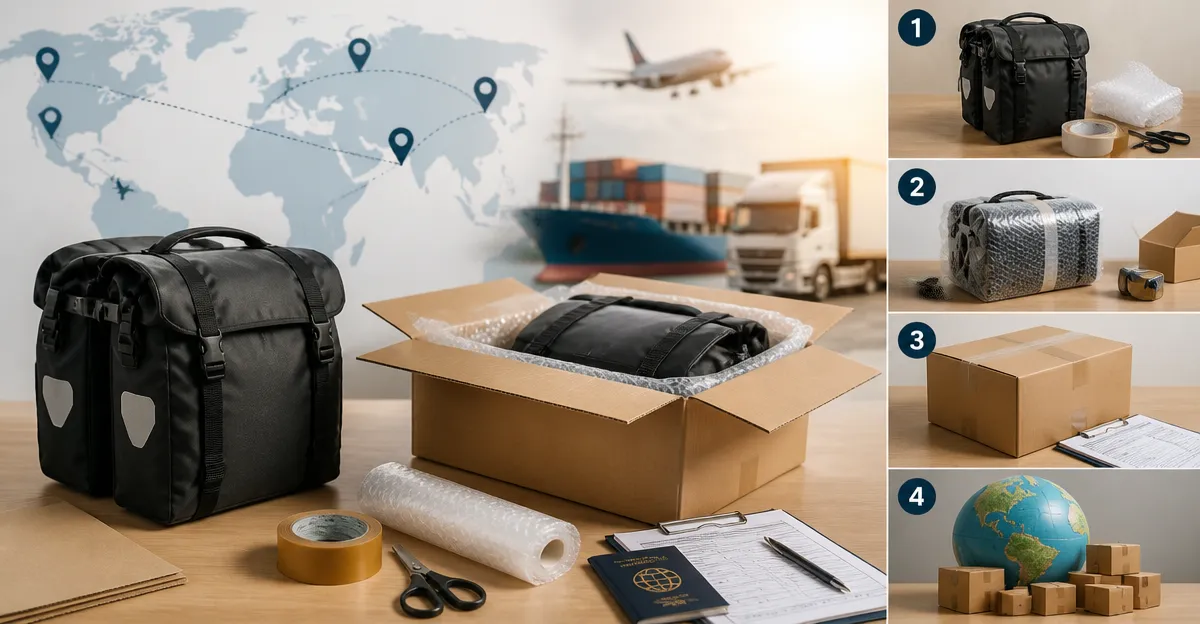
How to Ship Panniers Internationally as a Seller: Step‑by‑Step Packaging, Customs & Cost‑Saving Tips
Introduction
International sellers often face the challenge of delivering bulky, water‑resistant bike panniers to customers across continents. This guide explains how to package the items securely, complete accurate customs documentation, and choose carriers that reduce expenses. By following the procedures, sellers can protect their reputation, avoid costly delays, and increase profit margins.
Readers will learn which materials are essential, how to calculate dimensional weight, and which product‑specific features simplify the shipping process. The advice applies to all five pannier models listed below, yet it remains valuable even if a seller prefers alternative packaging supplies.
Each step includes actionable instructions, real‑world examples, and recommendations for the panniers themselves, illustrating why certain designs reduce the risk of damage during transit.
What You’ll Need
- Sturdy corrugated shipping boxes (double‑wall for heavy loads)
- Bubble wrap or foam sheets for cushioning
- Heavy‑duty packing tape (minimum 3 mil thickness)
- Water‑resistant zip‑lock bags for additional moisture protection
- Customs declaration forms or electronic filing access
- Scale for accurate weight measurement
While the list does not contain specific products from the catalogue, the pannier models themselves act as the primary items you will be shipping. Their built‑in rain covers and robust fabrics often eliminate the need for extra waterproof liners.
Step 1: Verify Product Dimensions and Weight
Accurate dimensions are the foundation of any international shipment. Measure each pannier while it is fully expanded, noting length, width, and height in centimeters. For example, the KEMIMOTO 34L Bike Pannier Bag expands to a total capacity of 34 L, with each side measuring roughly 40 cm × 30 cm × 15 cm when packed.
Weigh the empty pannier and then weigh it again after it is packed with typical retail accessories (e.g., rain cover, mounting straps). Record the net weight; the KEMIMOTO model averages 1.8 kg, while the heavier Marscamd 50L Expandable Bike Pannier can reach 2.5 kg when fully loaded.
Document these figures in a spreadsheet to streamline label creation later. Many carriers calculate shipping fees based on dimensional weight, which is derived from volume (length × width × height ÷ 5000 for metric). Knowing the exact numbers prevents unexpected surcharges.
Step 2: Choose the Right Shipping Box
Select a box that provides at least two inches of clearance on all sides. For a 34 L pannier, a 45 cm × 35 cm × 20 cm double‑wall box is ideal. The extra space accommodates cushioning material without compressing the pannier’s internal frame.
If you ship the ROCKBROS Waterproof Bike Pannier, which measures approximately 38 cm × 28 cm × 16 cm, a 48 cm × 38 cm × 22 cm box ensures a snug yet protective fit.
Use a box that can support the combined weight of the pannier and any additional accessories. A sturdy box reduces the risk of crushing during handling, especially when multiple pallets are stacked in a freight container.
Step 3: Apply Internal Cushioning and Moisture Barriers
Begin by placing a layer of bubble wrap on the bottom of the box. Then wrap the pannier in a water‑resistant zip‑lock bag; this step is optional for the KEMIMOTO and ROCKBROS models because they already include rain covers, but it adds an extra safeguard for the JXFUKAL Waterproof Bike Rack Bag, which relies on a detachable rain cover.
After the bag, surround the pannier with foam sheets or additional bubble wrap, focusing on the corners where impact is most likely. Secure the cushioning with a few strips of tape to prevent shifting during transit.
Finally, fill any remaining voids with packing peanuts or crumpled paper. The goal is to immobilize the pannier while preserving its shape, which is especially important for the expandable NDakter 35L Waterproof Bike Panniers. Their 25‑to‑35 L expansion can create gaps that need to be filled to avoid movement.
Step 4: Seal the Box and Attach Labels
Close the box and seal all seams with at least three strips of heavy‑duty tape, reinforcing the edges and corners. Use a tape dispenser to ensure even application and prevent air pockets.
Print the shipping label using the carrier’s online portal, then affix it to the largest flat surface. Include a duplicate label inside the box in case the outer label is damaged.
For customs, attach a commercial invoice that lists the product name, ASIN, unit price, and HS tariff code (typically 4202.92 for bicycle bags). Declare the accurate value; under‑declaring can lead to penalties, while over‑declaring inflates duties for the buyer.
Step 5: Complete Customs Documentation
Every country requires a customs declaration that includes the sender’s and receiver’s addresses, a detailed description, and the declared value. Use the HS code 4202.92, which covers “trunks, suitcases, and similar containers, with or without wheels, for bicycles.”
Attach the commercial invoice to the outside of the package in a clear plastic pouch. If the carrier offers electronic customs filing, upload the document directly to avoid manual handling delays.
Remember to check any import restrictions for textile products. The KEMIMOTO bag uses 600D PVC‑coated fabric, which is generally permissible, but some nations impose limits on PVC content. Including the material composition on the invoice can pre‑empt questions from customs officers.
Step 6: Select a Cost‑Effective International Carrier
Compare rates from major carriers such as DHL, UPS, FedEx, and national postal services. For parcels under 30 kg, many carriers offer a “economy” tier that balances speed and cost. Use the dimensional weight calculated in Step 1 to compare quoted prices accurately.
Consider using a freight forwarder for bulk shipments. Consolidating multiple pannier boxes into a single container can reduce per‑unit cost dramatically. Ensure the forwarder provides tracking and insurance, as the average retail price of these panniers ranges from $27.99 to $52.99.
When selecting a carrier, verify that they support the destination country’s import regulations for textile goods. Some carriers offer “customs brokerage” services that handle paperwork on your behalf, which can be valuable for first‑time sellers.
Step 7: Track, Communicate, and Manage Returns
After dispatch, share the tracking number with the buyer and set expectations for delivery timeframes. Most carriers provide end‑to‑end visibility, which reduces buyer anxiety and lowers the likelihood of disputes.
If a return is requested, inspect the returned pannier for damage. The robust construction of the KEMIMOTO 34L Bike Pannier Bag (600D PVC fabric, 4.4‑star rating) often survives multiple shipments without loss of waterproof integrity.
Offer a prepaid return label for defective items, but require the buyer to repack the pannier using the original cushioning materials. This practice minimizes additional damage and keeps your return costs predictable.
Tips & Pro Tips
- Use the built‑in rain cover. The KEMIMOTO and ROCKBROS models include waterproof covers that eliminate the need for separate plastic liners.
- Label each side of the box. Mark “Fragile – Handle with Care” and indicate the orientation (e.g., “This Side Up”) to reduce mishandling.
- Leverage bulk discounts. Ordering packing tape and bubble wrap in larger quantities can lower per‑unit cost by up to 20 %.
- Verify rack compatibility. Some buyers request that the pannier fit racks narrower than 6 inches; the NDakter and KEMIMOTO bags explicitly state this limitation.
- Take advantage of reflective strips. The reflective elements on the JXFUKAL and NDakter panniers improve visibility for end‑users and can be highlighted in marketing materials to justify a higher price point.
Troubleshooting
| Problem | Possible Cause | Solution |
|---|---|---|
| Package arrives wet | Rain cover not sealed properly | Ensure the KEMIMOTO or ROCKBROS rain cover is fully zipped and secured before boxing. |
| Customs delay | Incorrect HS code or missing material description | Update the commercial invoice with HS code 4202.92 and note “600D PVC‑coated fabric”. |
| Box crushed during transit | Insufficient box strength | Upgrade to double‑wall boxes and add extra corner protectors. |
Conclusion
Shipping bike panniers internationally requires careful measurement, protective packaging, accurate customs paperwork, and strategic carrier selection. By following the seven steps outlined above, sellers can safeguard their products, comply with global regulations, and keep shipping expenses under control. The featured panniers—KEMIMOTO, ROCKBROS, Marscamd, JXFUKAL, and NDakter—each offer built‑in features that simplify packaging and enhance customer satisfaction. Implement these practices, monitor performance, and adjust as needed to grow a reliable cross‑border business.
Products Mentioned in This Guide
Frequently Asked Questions
What packaging materials are recommended for shipping bike panniers internationally?
Use double‑wall corrugated boxes, bubble wrap or foam sheets for cushioning, and strong packing tape to secure the package.
How do I calculate dimensional weight for pannier shipments?
Measure the box's length, width, and height in centimeters, multiply them, and divide by the carrier’s divisor (usually 5000) to get the dimensional weight in kilograms.
Which customs documents are required when exporting panniers?
Provide a commercial invoice, a detailed packing list, and the HS code for bike accessories; include the item’s value and country of origin.
What are cost‑saving tips for choosing an international carrier?
Compare rates from multiple carriers, use flat‑rate services for heavier boxes, and consolidate shipments when possible to benefit from volume discounts.
Do pannier design features affect shipping risk?
Yes, water‑resistant fabrics and reinforced seams reduce moisture damage and structural stress, making the items easier to pack securely.