Introduction
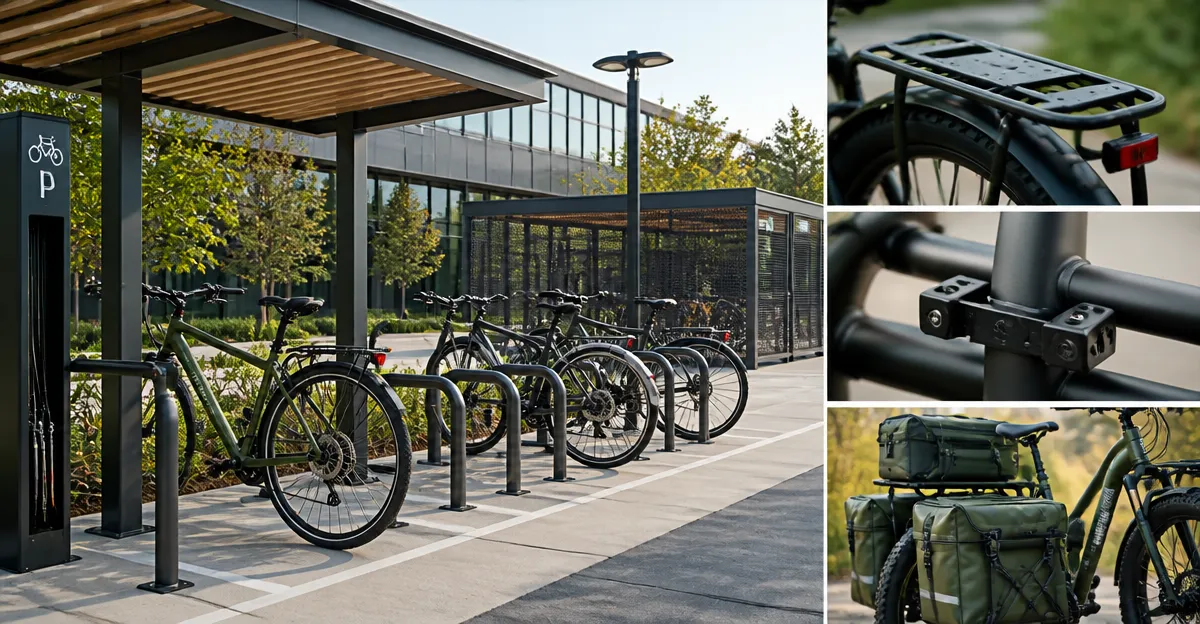
One will discover the essential principles of bike parking infrastructure and cargo attachment compatibility in this guide. It explains how to design safe, space‑efficient storage solutions for road, mountain, and hybrid bicycles. Readers will learn about industry standards, installation techniques, and how to select accessories that complement their environment. The guide also highlights three highly rated Amazon products that exemplify best‑in‑class performance.
Background and Context
Effective bike storage reduces clutter, prevents damage, and encourages sustainable transportation. In urban apartments and suburban garages, space is often at a premium, making vertical or freestanding solutions indispensable. The structural integrity of a rack depends on material quality, weight capacity, and mounting method. Cargo attachment compatibility further influences safety, as poorly matched racks can cause load imbalance or frame stress. Understanding these fundamentals enables one to create a reliable system that serves both parking and transport needs.
Design Standards for Bike Parking Infrastructure
Professional standards recommend a minimum load capacity of 40 lb per bike for residential racks, with a total capacity of 80 lb for two‑bike units. Materials such as powder‑coated steel or aluminium alloy provide corrosion resistance and long‑term durability. Vertical racks should have a footprint no larger than 30 in × 20 in to maximise floor space, while freestanding floor stands require a stable base with three‑point contact to prevent tipping.
Key design criteria include:
- Weight capacity per bike and overall load rating.
- Adjustability to accommodate various frame geometries and tyre widths.
- Secure anchoring without permanent drilling, when possible.
- Durable finishes that resist scratches and environmental wear.
When these criteria are met, a storage solution can support daily use without compromising bike integrity.
Types of Bike Parking Solutions
Two primary categories dominate the market: vertical wall‑lean racks and freestanding floor stands. Vertical racks, such as the Delta Cycle Michelangelo Vertical 2‑Bike Rack, suspend bicycles from a compact frame, eliminating the need for wall anchors. Freestanding floor stands, exemplified by the CHEPARK Indoor Bike Floor Stand, rest on the floor and support the bike by its wheel, making them ideal for renters or temporary setups.
Vertical racks excel in space‑saving scenarios, while floor stands provide flexibility and ease of access. Selecting the appropriate type depends on the available space, floor surface, and user preference for loading and unloading the bicycle.
Vertical Rack Example: Delta Cycle Michelangelo
- Gravity‑based design holds up to 80 lb total (40 lb per bike).
- Dimensions: 84 in × 26 in × 16 in; compact footprint.
- Fully adjustable arms accommodate road, MTB, and hybrid frames.
- Powder‑coated steel finish with rubber feet for stability.
- Quick assembly with only a screwdriver required.
- Rating: 4.5/5 based on customer reviews.
Freestanding Floor Stand Example: CHEPARK Indoor Bike Floor Stand
- Supports 20‑29 in wheelbase bikes, up to tyre width 2.4 in.
- Weight capacity suitable for most road and mountain bikes; not recommended for heavy e‑bikes.
- Wide base with three‑point wheel contact prevents tipping.
- Rubberized feet protect polished floors and reduce movement.
- Price: $27.35; Rating: 4.5/5 from 883 reviews.
Cargo Attachment Compatibility
When adding luggage or panniers, the rear rack must align with the bike’s seatpost diameter and frame geometry. Aluminium alloy racks, such as the Takelablaze Retractable Aluminum Rear Bike Rack, offer a lightweight yet strong platform with a bearing capacity of 20 lb. Compatibility hinges on seatpost diameter (27.2–31.8 mm) and the ability to adjust forward or backward placement.
Important cargo rack features include:
- Adjustable mounting position to balance load distribution.
- Raised tail and front flap to secure panniers during travel.
- Corrosion‑resistant aluminium alloy construction.
- Inclusion of mounting hardware, rubber patches, and an Allen wrench for installation.
By matching these specifications with the bicycle’s design, one ensures safe transport of gear without compromising handling.
Comparison and Selection Guide
| Feature | Delta Cycle Michelangelo | CHEPARK Indoor Bike Floor Stand | Takelablaze Retractable Rear Rack |
|---|---|---|---|
| Primary Use | Vertical two‑bike storage | Freestanding single‑bike floor stand | Rear cargo attachment |
| Weight Capacity | 80 lb total (40 lb per bike) | Suitable for bikes up to 30 lb; not for heavy e‑bikes | 20 lb cargo load |
| Adjustability | Arms adjustable for frame size | Slider positions for wheel tray | Forward/backward mount adjustment |
| Footprint | 84 in × 26 in × 16 in | Compact base, ideal for small rooms | Mounted on seatpost, no floor space required |
| Price | Not listed (manufacturer pricing) | $27.35 | $19.99 |
| Customer Rating | 4.5/5 (estimated) | 4.5/5 from 883 reviews | 4.4/5 from 149 reviews |
One should evaluate the intended environment, load requirements, and budget before selecting a solution. Vertical racks excel where floor space is limited, while freestanding stands provide portability. Cargo racks are essential for commuters who transport gear regularly.
Best Practices and Installation Tips
- Assess the floor or wall surface for levelness; use a spirit level before placement.
- When using a gravity‑based vertical rack, ensure the base rests on a non‑slippery surface and that rubber feet are engaged.
- For freestanding floor stands, position the unit away from high‑traffic areas to avoid accidental collisions.
- During cargo rack installation, verify the seatpost diameter matches the rack’s clamp range (27.2–31.8 mm).
- Tighten all bolts to the manufacturer‑specified torque; over‑tightening can damage frame paint.
- Periodically inspect mounting hardware for wear, especially rubber patches that protect the frame.
- When storing multiple bikes, alternate the direction of wheel orientation to distribute load evenly.
Frequently Asked Questions
Can a vertical rack be installed without drilling?
Yes, the Delta Cycle Michelangelo uses a gravity‑lean design that rests on the floor and does not require permanent wall anchors.
Is the CHEPARK floor stand suitable for e‑bikes?
The manufacturer advises against heavy e‑bikes because the load may exceed the stand’s capacity and affect stability.
What tyre widths can the Takelablaze rear rack accommodate?
The rack supports tyres up to 2.4 in wide, making it compatible with most road, mountain, and hybrid bicycles.
How many bikes can the Delta Cycle Michelangelo hold?
The rack is designed for two bicycles, each up to 40 lb, for a combined capacity of 80 lb.
Do I need special tools to assemble the CHEPARK floor stand?
No additional tools are required; the stand assembles with the included screwdriver and can be set up within minutes.
Can the Takelablaze rack be used on bikes with a straight seatpost?
No; the rack is not compatible with bikes that have a straight seatpost, as the mounting mechanism requires a traditional post shape.
Conclusion
One now possesses a comprehensive understanding of bike parking infrastructure, design standards, and cargo attachment compatibility. By applying the outlined best practices, users can create safe, space‑efficient storage that protects both bicycles and cargo. The featured products illustrate practical implementations of vertical, freestanding, and rear‑rack solutions, each meeting specific needs while adhering to industry standards.
Products Featured in This Guide
Delta Cycle Michelangelo Vertical 2‑Bike Rack
Price: Not listed | Rating: 4.5/5
Featured because it provides a space‑saving, drill‑free vertical storage solution with a robust 80 lb capacity.
CHEPARK Indoor Bike Floor Stand
Price: $27.35 | Rating: 4.5/5 (883 reviews)
Featured because it offers a portable, freestanding solution that protects wheels and fits a wide range of bike sizes.
Takelablaze Retractable Aluminum Rear Bike Rack
Price: $19.99 | Rating: 4.4/5 (149 reviews)
Featured because it provides a lightweight, adjustable rear‑rack solution for transporting cargo on most bicycles.