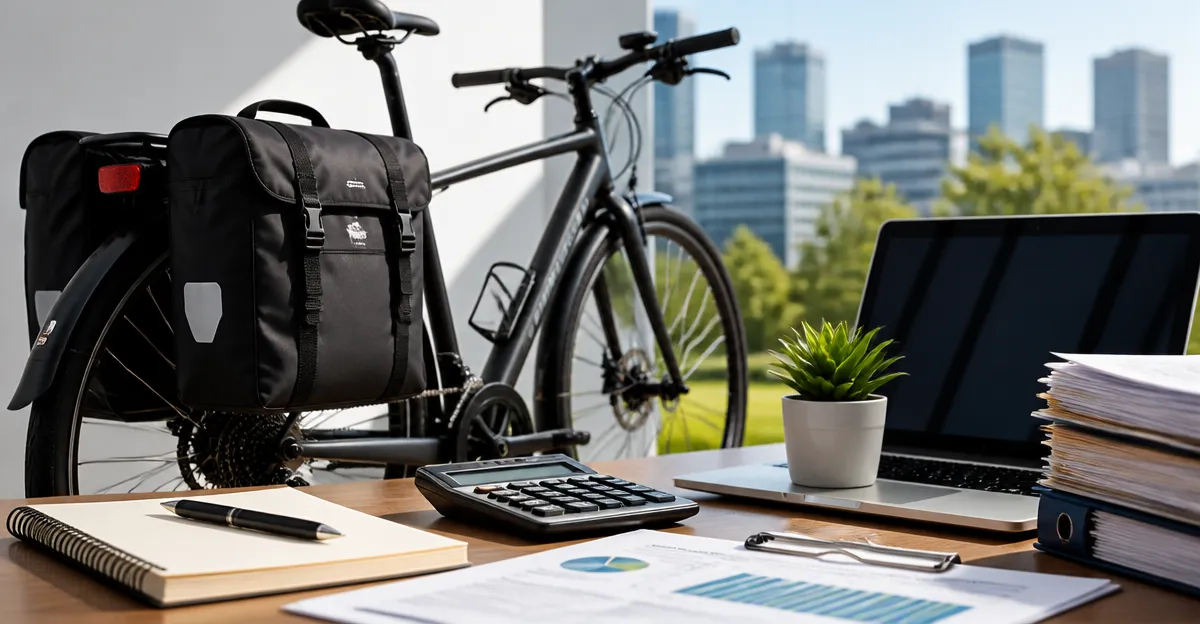
Are Panniers Tax Deductible for Small Businesses? The Complete Guide to Claiming Bike Gear on Your Taxes
Introduction
This guide explains whether panniers can be deducted as a business expense, who may benefit, and how to substantiate the deduction. Readers will learn the relevant tax code, documentation requirements, and practical product recommendations that align with common business needs. The article also provides a comparison of popular pannier models, best‑practice tips, and answers to frequent questions. By the end of the guide, small‑business owners will be equipped to make informed purchasing decisions and claim legitimate tax benefits.
Background and Context
Under United States tax law, an expense is deductible when it is both ordinary and necessary for the conduct of a trade or business. Bicycle gear, including panniers, qualifies when the bike is used primarily for business activities such as deliveries, mobile services, or client visits. The Internal Revenue Service (IRS) treats a bicycle as a capital asset if its cost exceeds $2,500, requiring depreciation over its useful life. Expenses below this threshold may be deducted in the year of purchase as a Section 179 expense, provided the business has sufficient taxable income.
Accurate record keeping is essential. Receipts, mileage logs, and a written justification linking the panniers to business operations must be retained for at least three years. Failure to maintain documentation can result in a disallowed deduction and potential penalties.
Small businesses that rely on bicycles include food‑delivery services, courier firms, on‑site repair technicians, and eco‑friendly marketing agencies. For these operators, panniers serve as the primary cargo compartment, making them a logical candidate for deduction.
Eligibility of Bike Gear as a Business Expense
To claim a pannier deduction, the taxpayer must demonstrate that the bicycle and its accessories are used more than 50 % for business purposes. The IRS uses a “business‑use percentage” to allocate the allowable portion of the expense. For example, if a delivery rider uses the bike 80 % of the time for work and 20 % for personal rides, 80 % of the pannier cost may be deducted.
Two primary methods exist for deducting the cost:
- Section 179 Expensing: Allows immediate deduction of the full cost up to the annual limit, provided the asset qualifies as non‑listed property and the business has taxable income.
- Depreciation: Spreads the cost over five years using the Modified Accelerated Cost Recovery System (MACRS) when the asset exceeds the Section 179 threshold.
Both methods require a clear business purpose statement. A concise example might read: “Panniers are required to transport delivery packages for XYZ Food Delivery, enabling compliance with service‑level agreements and reducing reliance on third‑party carriers.”
Below, each major product is examined for its suitability in typical small‑business scenarios.
Choosing the Right Pannier for Your Business
When selecting panniers, consider capacity, waterproofing, mounting stability, and ease of installation. The following products represent a range of price points and features that align with common business models.
The first product, KEMIMOTO Bike Panniers, offers 34 L of total capacity, a dedicated rain cover, and a double‑strap fastening system. Its obtuse‑angle design prevents heel strikes, which is valuable for delivery riders who need to maintain balance while navigating traffic. With a 4.4‑star rating from 2,511 reviews and a price of $33.99, it provides strong value for businesses on a modest budget.
The second option, Bushwhacker Omaha Grocery Panniers, is designed for quick market trips but also serves courier needs. Each bag holds a full‑sized grocery bag and supports up to 15 lb, making it suitable for light‑weight parcels. At $64.95, it is pricier but includes a three‑point mounting system that reduces bounce on uneven roads.
For businesses that require a hard shell for added protection, the JXFUKAL Hard Shell Bike Bag delivers a rigid EVA exterior, waterproof PU coating, and reflective sides. It is available in 9.5 L, 17 L, and 40 L capacities; the 17 L model balances volume and maneuverability for urban deliveries. The bag’s price of $39.99 and 4.5‑star rating from 2,023 reviews indicate a solid mid‑range choice.
The NDakter 35L Waterproof Bike Panniers feature an expandable design (25 L to 35 L) and robust 900D TPU‑coated fabric. Reflective panels improve night‑time safety, a critical factor for delivery riders operating after dark. Priced at $27.99 with a 4.3‑star rating, they are an economical option for businesses seeking flexibility.
Finally, the Vuudh 36L Waterproof Bike Panniers provide the largest capacity among the reviewed items and include a removable PE plate for structural support. The bag’s 4.7‑star rating from 89 reviews suggests high customer satisfaction, and its $20.99 price makes it the most affordable high‑capacity solution.
Comparison and Selection Guide
| Feature | KEMIMOTO | Bushwhacker Omaha | JXFUKAL Hard Shell | NDakter | Vuudh |
|---|---|---|---|---|---|
| Capacity | 34 L (2 × 17 L) | One full grocery bag per side (≈15 lb each) | 9.5 L / 17 L / 40 L options | 25 L–35 L (expandable) | 36 L |
| Waterproof | 600D Oxford + PVC rain cover | Water‑resistant nylon mesh | EVA + PU coating, rain cover | 900D TPU + PVC layer | 600D polyester, flip‑over waterproof |
| Mounting System | 6 heavy‑duty straps + side hooks | 3‑point metal hooks + bungee | 2 buckles + Velcro strap | 3 buckles + 2 side straps | 4 metal buckles + Velcro |
| Reflective Elements | None | None | Four‑sided reflective strip | Large reflective coating on three sides | Reflective strips for night visibility |
| Price (USD) | 33.99 | 64.95 | 39.99 | 27.99 | 20.99 |
| Average Rating | 4.4/5 (2,511 reviews) | 4.5/5 (1,032 reviews) | 4.5/5 (2,023 reviews) | 4.3/5 (253 reviews) | 4.7/5 (89 reviews) |
Businesses should match the product’s strengths to their operational demands. High‑volume couriers may prioritize capacity and durability, while a boutique marketing firm might value sleek design and reflective safety features.
Best Practices & Tips for Claiming Panniers
- Maintain Detailed Receipts: Keep the original Amazon invoice, noting the product name, price, and purchase date.
- Document Business Use: Record daily mileage, purpose of each ride, and the proportion of cargo that is business‑related.
- Separate Personal and Business Loads: Use a distinct color‑coded bag or label to avoid commingling personal items, which could jeopardize the deduction.
- Leverage Section 179 When Possible: If the pannier cost is below the $2,500 threshold, elect to expense the full amount in the year of purchase for immediate tax relief.
- Consider Depreciation for Higher‑Cost Models: For hard‑shell or premium models exceeding the Section 179 limit, apply MACRS over a five‑year recovery period.
- Update Your Accounting Software: Tag the expense under “Vehicle – Bicycle Accessories” to ensure consistent tracking.
- Consult a Tax Professional: Complex scenarios, such as mixed‑use bicycles, benefit from expert guidance to avoid audit risk.
Frequently Asked Questions
1. Can I deduct a pannier if I use my bike for both personal and business trips?
Yes, you may deduct the portion of the cost that corresponds to the percentage of business use. Accurate mileage logs are essential to substantiate the allocation.
2. Do I need to depreciate a pannier that costs $1,800?
No, a pannier priced at $1,800 falls below the Section 179 threshold and can be expensed in full, provided the business has sufficient taxable income.
3. Are waterproof features a tax requirement?
Waterproofing is not a tax requirement, but it supports the claim of “necessary” because it protects cargo from damage, thereby preserving business assets.
4. How long should I keep receipts for pannier purchases?
The IRS recommends retaining receipts for at least three years after filing the return that includes the deduction.
5. Can I claim a pannier purchased for a personal hobby bike?
No, the expense must be directly tied to a trade or business. A hobby bike does not meet the ordinary‑and‑necessary test.
6. What if my bike is leased rather than owned?
You may still deduct panniers as a business expense, but you cannot claim depreciation on the bike itself. The pannier cost is treated as a separate asset.
7. Do I need to include the pannier’s value when calculating the basis of the bicycle?
Yes, if you are depreciating the bicycle, the cost of accessories that are permanently attached should be added to the basis. Removable panniers are generally treated as separate assets.
Conclusion
Panniers can be a legitimate tax deduction for small businesses that rely on bicycles for deliveries, services, or client outreach. By understanding the IRS criteria, documenting business use, and selecting a product that aligns with operational needs, owners can reduce taxable income while improving efficiency. The featured products illustrate a spectrum of options from budget‑friendly to premium hard‑shell models, each offering features that support both practicality and tax compliance.
Implement the best‑practice tips, retain proper records, and consult a qualified tax professional to ensure that your pannier purchase maximizes both functional value and tax benefit.
Products Featured in This Guide
KEMIMOTO Bike Panniers
Price: $33.99 | Rating: 4.4/5 (2,511 reviews)
Featured for its 34 L total capacity, waterproof rain cover, and affordable price, making it ideal for delivery‑oriented small businesses.
Bushwhacker Omaha Grocery Panniers
Price: $64.95 | Rating: 4.5/5 (1,032 reviews)
Featured for its three‑point mounting system and ability to hold full‑size grocery bags, suitable for businesses that transport lightweight parcels.
JXFUKAL Hard Shell Bike Bag
Price: $39.99 | Rating: 4.5/5 (2,023 reviews)
Featured for its rigid EVA shell, waterproof PU coating, and reflective sides, offering protection for high‑value cargo on e‑bikes.
NDakter 35L Waterproof Bike Panniers
Price: $27.99 | Rating: 4.3/5 (253 reviews)
Featured for its expandable 25‑35 L capacity and robust waterproof construction, providing flexibility for varying load sizes.
Vuudh 36L Waterproof Bike Panniers
Price: $20.99 | Rating: 4.7/5 (89 reviews)
Featured for its large 36 L capacity, removable PE plate for shape retention, and high customer satisfaction at an economical price.