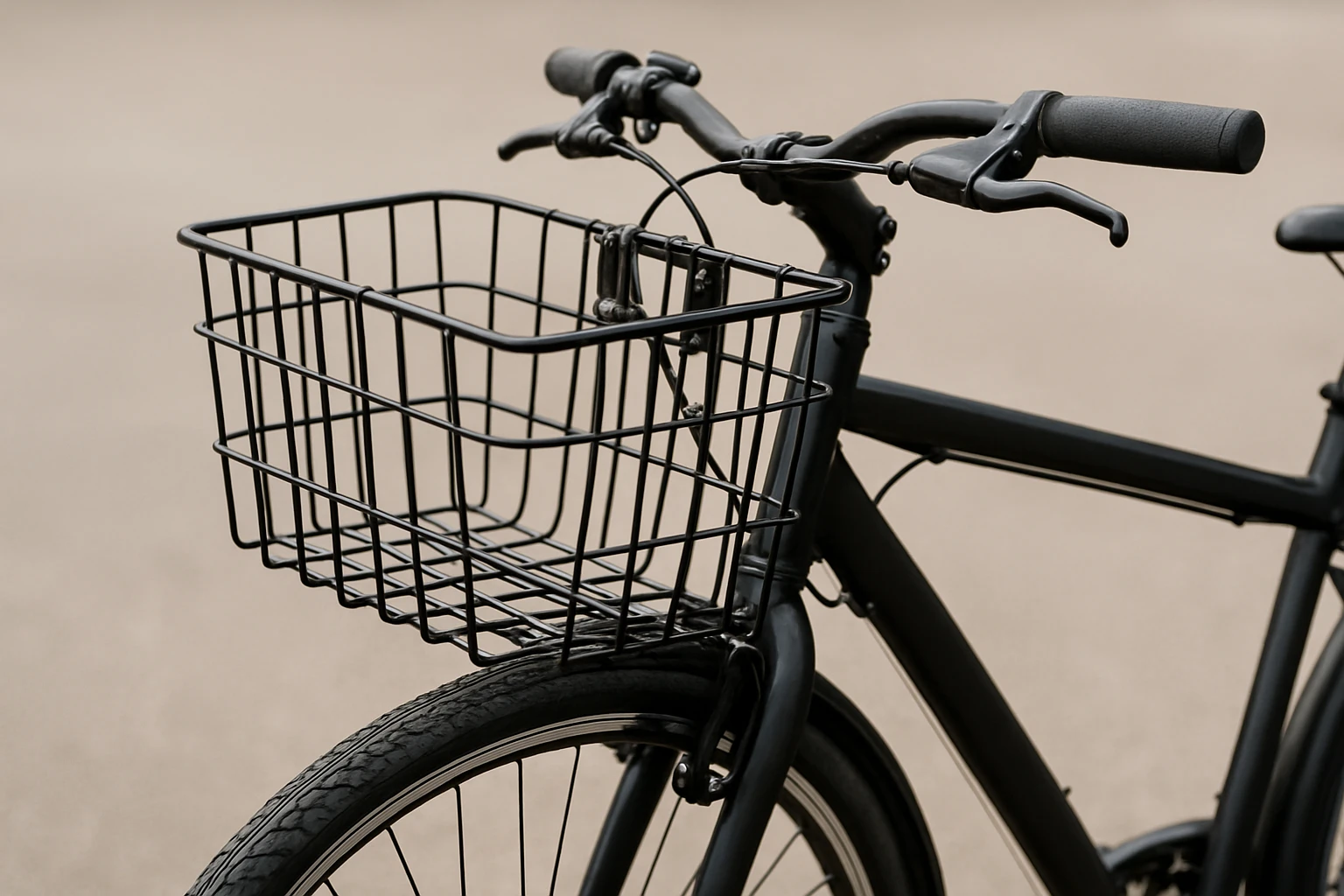
The Ultimate Guide to Bike Basket Frame Stress Limits: How to Calculate Weight Capacity, Prevent Damage & Ride Safely
Introduction
This guide explains how to evaluate the stress limits of bike basket frames, calculate safe weight capacities, and adopt practices that prevent damage. Readers will learn fundamental physics concepts, practical measurement techniques, and criteria for selecting a reliable basket. The article also highlights a recommended product that meets the discussed standards. By the end of the guide, one will be equipped to ride confidently while protecting both the bicycle and the cargo.
Background and Context
Bike baskets are mounted on the handlebars or rear rack and are subjected to dynamic forces generated by pedaling, terrain irregularities, and cargo weight. The frame of the basket is typically made from steel, aluminum, or composite materials, each possessing distinct yield strengths. Understanding the relationship between load, lever arm, and material fatigue is essential for preventing permanent deformation or failure.
Key terms include:
- Static load: The weight placed on the basket while the bicycle is stationary.
- Dynamic load: Additional forces that arise during motion, such as bumps and acceleration.
- Yield strength: The stress at which a material begins to deform plastically.
- Factor of safety (FoS): A multiplier applied to the theoretical limit to ensure a margin of error.
Most manufacturers provide a maximum recommended load, but the actual safe capacity depends on installation quality and riding conditions. Applying a systematic approach enables cyclists to make informed decisions.
Understanding Stress Limits
The stress experienced by a basket frame can be approximated using the bending moment equation:
σ = (M * c) / I
where σ is stress, M is the bending moment (force multiplied by distance from the mounting point), c is the distance from the neutral axis to the outer fiber, and I is the moment of inertia of the frame cross‑section. For a rectangular steel tube, I can be calculated from the tube dimensions. The higher the moment of inertia, the greater the resistance to bending.
Practically, cyclists can estimate the bending moment by multiplying the cargo weight by the horizontal distance from the basket’s center of mass to the handlebar clamp. A conservative factor of safety of 1.5 to 2.0 is advisable for everyday use.
Example calculation:
- Assume a cargo load of 15 kg (≈33 lb).
- Measure a distance of 0.30 m from the basket’s center to the clamp.
- Compute the moment: M = 15 kg × 9.81 m/s² × 0.30 m ≈ 44 Nm.
- If the basket’s steel tube has an I value of 1.2 × 10⁻⁶ m⁴ and c = 0.015 m, then σ ≈ (44 Nm × 0.015 m) / 1.2 × 10⁻⁶ m⁴ ≈ 550 MPa.
- Compare σ with the typical yield strength of stainless steel (≈250 MPa). The calculated stress exceeds the material limit, indicating the load is unsafe.
This example illustrates why a basket rated for 20 kg, such as the Qiyue Folding Rear Bike Basket, must be evaluated in the context of lever arm length and riding dynamics.
Product Recommendation: Qiyue Folding Rear Bike Basket
The Qiyue Folding Rear Bike Basket offers a robust steel construction, a maximum load capacity of 20 kg, and anti‑rust treatment. Key features include:
- Easy installation with protective plastic tube and screw fasteners.
- Reflective elements for enhanced visibility.
- Compatibility with most folding and mountain bikes (handlebar diameter < 1.77 in).
- Durable stainless‑steel wire that resists corrosion.
- Customer rating of 4.4 out of 5 stars based on 82 reviews.
At a price of $16.29, the basket provides a cost‑effective solution for commuters and recreational cyclists. Its folding design reduces drag when the basket is not in use, contributing to overall ride efficiency.
Comparison and Selection Guide
When choosing a bike basket, consider the following criteria:
| Criterion | Why It Matters | Typical Options |
|---|---|---|
| Maximum Load Capacity | Ensures the frame will not exceed stress limits. | 10 kg, 15 kg, 20 kg, 30 kg |
| Material | Determines corrosion resistance and yield strength. | Stainless steel, aluminum, polymer |
| Mounting Compatibility | Matches handlebar diameter and bike geometry. | Universal clamp, specific size adapters |
| Foldability | Reduces wind resistance when the basket is empty. | Fixed, hinged, collapsible |
| Price‑to‑Performance Ratio | Balances cost with durability and features. | Budget (<$20), Mid‑range ($20‑$40), Premium (>$40) |
For riders who prioritize durability and moderate cargo, the Qiyue basket aligns well with the 20 kg capacity requirement while remaining affordable. Cyclists needing higher capacity may explore aluminum alloy models rated for 30 kg, but should verify the mounting hardware can sustain the increased moment.
Best Practices & Tips for Safe Use
Follow these actionable recommendations to maintain basket integrity and protect the bicycle frame:
- Verify Installation Tightness: Ensure all screws are fully tightened after each ride, especially after traversing rough terrain.
- Distribute Load Evenly: Place heavier items close to the mounting point to minimize lever arm length and reduce bending stress.
- Limit Dynamic Loads: Avoid over‑loading during high‑speed descents; consider removing excess cargo before steep downhill sections.
- Inspect for Wear: Check the anti‑rust coating and steel wire for signs of corrosion or fatigue every month.
- Use Protective Padding: Insert a soft liner between delicate items and the basket to prevent shifting that could create uneven forces.
- Fold When Not in Use: Collapse the basket on long rides without cargo to reduce aerodynamic drag and prevent wind‑induced vibration.
Adhering to these practices extends the service life of both the basket and the bicycle frame, thereby ensuring a safer riding experience.
Frequently Asked Questions
1. How do I calculate the safe load for my specific bike? Use the bending moment formula presented earlier, substitute the actual distance from the basket’s center of mass to the clamp, and apply a factor of safety of at least 1.5.
2. Can I use a rear‑mount basket on a front‑handlebar bike? Most rear baskets are designed for rear rack mounting; attempting to install them on a front handlebar may exceed the frame’s stress limits and void warranties.
3. What maintenance is required for steel baskets? Clean the basket after exposure to rain or mud, dry it thoroughly, and reapply a light oil coating to maintain the anti‑rust treatment.
4. Does folding affect the basket’s load capacity? The folding mechanism does not alter the material’s yield strength, but ensure that the hinge pins are securely locked before loading.
5. Are there legal restrictions on basket size? Some jurisdictions impose width limits for bicycles on public pathways; verify local regulations before installing an oversized basket.
6. How often should I replace my basket? Replace the basket when visible cracks appear, when the load capacity is consistently exceeded, or after five years of heavy use, whichever occurs first.
7. Can I attach accessories such as lights to the basket? Yes, provided the accessories do not add significant weight or create point loads that could concentrate stress.
Conclusion
Understanding the stress limits of bike basket frames enables cyclists to calculate safe weight capacities, select appropriate products, and adopt maintenance habits that prevent damage. By applying the presented formulas, respecting the factor of safety, and choosing a reliable basket such as the Qiyue Folding Rear Bike Basket, riders can enjoy the convenience of cargo transport without compromising safety. Consistent inspection and prudent loading practices further ensure long‑term durability and a pleasant riding experience.
Products Featured in This Guide
Qiyue Folding Rear Bike Basket
Price: $16.29
Rating: 4.4 out of 5 stars (82 reviews)
Featured because it offers a 20 kg load capacity, anti‑rust stainless steel construction, and a foldable design that aligns with the stress‑limit calculations discussed in this guide.