Introduction
One often assumes that transporting fresh produce on a bicycle is straightforward, yet improper packing can lead to bruised fruit, wilted vegetables, and wasted nutrition. This guide explains how one can preserve the quality of perishable items during a commute or a market run. By following nine proven strategies, the cyclist will learn to protect delicate produce from impact, moisture, and temperature fluctuations. The information is valuable for urban commuters, market vendors, and anyone who prefers a sustainable, pedal‑powered grocery routine.
What You’ll Need
- Water‑proof pannier with secure mounting system – recommended: KEMIMOTO Waterproof Bike Pannier 30L
- Compact secondary bag for extra cushioning – recommended: JXFUKAL 13L Bike Trunk Bag
- Reusable produce bags or mesh netting
- Soft padding material such as foam sheets or folded towels
- Adjustable Velcro straps (usually included with panniers)
- Insulated cooler sleeve (optional for temperature‑sensitive items)
Step 1: Choose a Waterproof, Secure Pannier
The first decision influences every subsequent step. One should select a pannier that offers a sealed interior, sturdy mounting, and reflective safety features. The KEMIMOTO Waterproof Bike Pannier 30L provides 500D PVC air‑tight material, a roll‑top double seal, and a 3‑point triangle mount that eliminates wobble on rough roads. Its price of $48.49 and perfect 5‑star rating (based on one review) indicate high customer satisfaction. The padded laptop compartment can double as a protective cradle for fragile produce, while the external bungee cord secures larger items.
Step 2: Clean and Dry All Produce
One must ensure that each fruit or vegetable is free of excess moisture before packing. Moisture can weaken packaging seams and promote mold growth during the ride. Gently rinse produce under cool water, then pat dry with a clean towel. For leafy greens, spin them in a salad spinner to remove residual water. Dry produce reduces the risk of the pannier’s interior becoming soggy, especially when the waterproof seal is tested by rain.
Step 3: Use Soft Padding to Cushion Impact
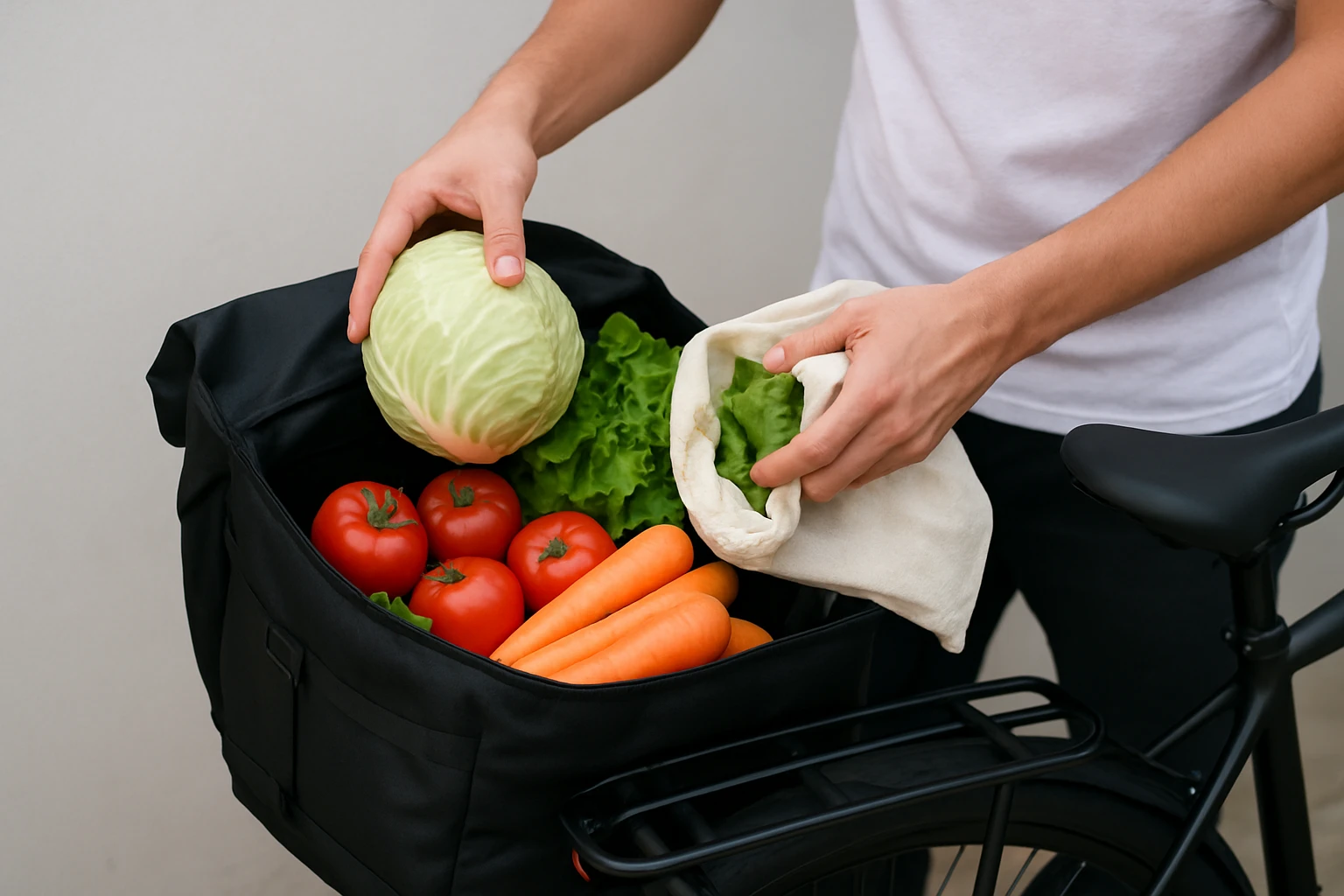
Impact resistance is essential for preventing bruises. One can line the pannier’s interior with foam sheets, folded towels, or the padded laptop sleeve that comes with the KEMIMOTO bag. The sleeve’s shock‑absorbing padding creates a buffer zone between hard bike frames and delicate berries. Place the padding against the pannier walls, then arrange produce on top, ensuring that each item rests on a cushion rather than directly on metal or hard plastic.
Step 4: Organize by Weight and Fragility
Heavier items such as squash or root vegetables should occupy the bottom of the pannier, while lighter, more delicate items like tomatoes and strawberries belong on top. This hierarchy prevents the heavier goods from crushing the lighter ones during acceleration or sudden stops. Use the side mesh pocket of the KEMIMOTO pannier to store small, sturdy items, and reserve the main compartment for the bulk of the produce.
Step 5: Secure Items with Adjustable Straps
Movement inside the bag can cause friction and bruising. The KEMIMOTO pannier includes hook‑and‑loop straps and a rotating buckle that lock the bag to the rear rack. Once the produce is arranged, tighten the built‑in Velcro straps around the interior to hold items in place. For additional security, the JXFUKAL 13L Bike Trunk Bag offers four hook‑and‑loop straps that can be used inside the larger pannier as secondary restraints. These straps keep the load stable on uneven terrain.
Step 6: Take Advantage of Reflective Elements for Safety
Visibility is a critical safety factor for cyclists transporting valuable cargo. Both recommended panniers incorporate reflective details that enhance low‑light visibility. The KEMIMOTO bag features multiple reflective strips on its exterior, while the JXFUKAL bag adds reflective panels on four sides. By using these bags, the cyclist benefits from increased awareness by motorists, reducing the likelihood of abrupt maneuvers that could jostle the produce.
Step 7: Convert the Pannier to a Shoulder Bag for Off‑Bike Transport
When the cyclist arrives at a market or office, the ability to carry produce without the bike is advantageous. The KEMIMOTO pannier includes a wide, padded shoulder strap that allows conversion to a cross‑body or over‑the‑shoulder bag. This feature enables one to carry groceries directly from the bike to the kitchen without transferring items to another container, minimizing handling and the chance of bruising.
Step 8: Manage Temperature with an Insulated Sleeve (Optional)
Some produce, such as leafy greens, benefits from a cooler environment. One may place an insulated cooler sleeve inside the pannier, surrounding it with the soft padding described in Step 3. The waterproof nature of the KEMIMOTO bag ensures that external moisture does not compromise the cooler’s performance. Although this step is optional, it extends freshness during longer rides in warm weather.
Step 9: Perform a Post‑Ride Inspection
After each journey, the cyclist should open the pannier and examine each item for signs of bruising or moisture. Remove any damaged produce promptly to prevent it from affecting the remaining items. Additionally, wipe the interior of the pannier with a damp cloth to remove any stray juices that could degrade the waterproof seal over time. Regular maintenance preserves the bag’s performance for future trips.
Tips & Pro Tips
- Use reusable mesh produce bags to keep individual items separated and to promote airflow.
- Rotate the pannier’s contents every few rides to avoid prolonged pressure on the same fruits.
- When riding in heavy rain, double‑check the roll‑top seal of the KEMIMOTO bag before departure.
- Consider adding a small zip‑lock bag for berries, as they are especially prone to crushing.
- If the route includes steep hills, shift heavier produce toward the rear of the bag to maintain balance.
Troubleshooting
Problem: Produce becomes soggy despite a waterproof bag.
Solution: Verify that the roll‑top seal is fully closed and that the bag’s interior is dry before loading. Use a dry towel as an additional barrier if necessary.
Problem: Items shift during the ride and cause bruising.
Solution: Tighten the internal Velcro straps and add extra padding around the moving items. The secondary straps of the JXFUKAL bag can be employed inside the main pannier for added stability.
Conclusion
By following the nine professional steps outlined above, one can transport fresh produce on a bicycle without incurring bruises or spoilage. The combination of a waterproof, well‑mounted pannier, proper cushioning, strategic organization, and secure fastening creates a reliable system for daily market trips. Implementing the optional temperature control and post‑ride inspection further enhances the longevity of both the produce and the equipment. One is now equipped to enjoy sustainable grocery runs with confidence.
Products Mentioned in This Guide
Frequently Asked Questions
What type of pannier is best for transporting fresh produce?
Use a waterproof pannier with a secure mounting system, such as a 30 L KEMIMOTO model, to keep items dry and stable.
How should I cushion delicate fruits and vegetables inside the pannier?
Wrap them in reusable produce bags or mesh netting and add foam sheets or folded towels as padding.
Can I use a secondary bag for extra protection?
Yes, place a compact secondary bag like a 13 L trunk bag inside the pannier to create an additional cushioned layer.
How do I secure the produce to prevent movement during rides?
Use the adjustable Velcro straps that come with the pannier to tighten the bag and keep the cushioning in place.
What temperature considerations should I keep in mind while cycling with produce?
Avoid extreme heat or direct sunlight; ride during cooler periods or add an insulated liner if needed.