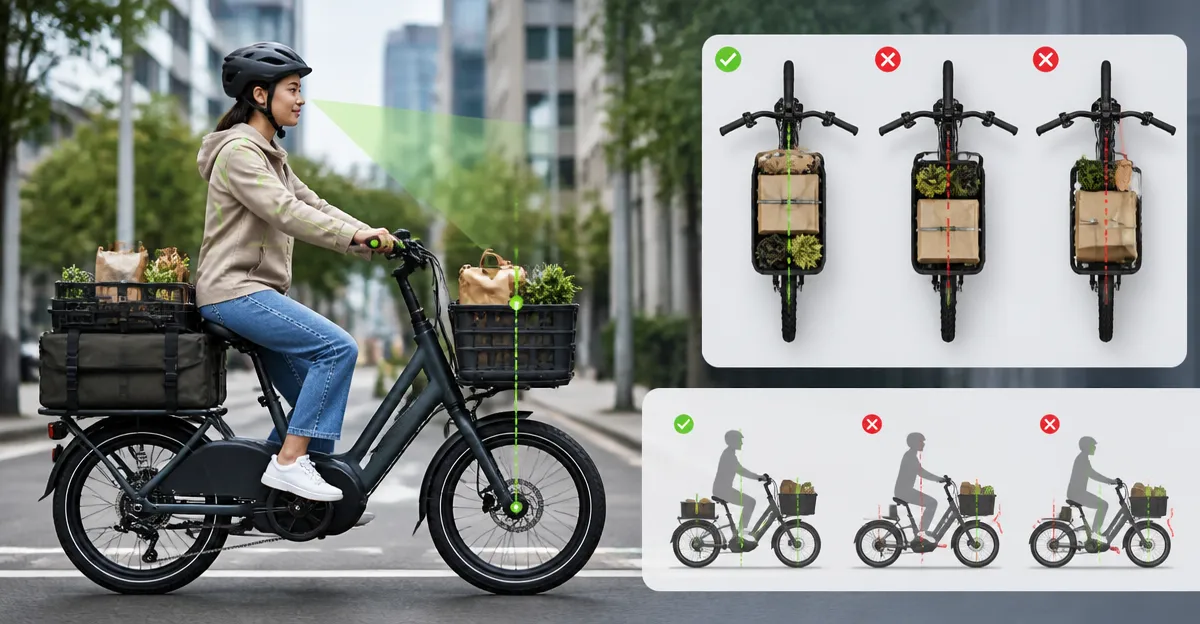
How to Optimize Urban Cargo Bike Ergonomics: Best Basket Placement for Steering Comfort
Introduction
Urban cyclists often face the challenge of balancing cargo load with precise steering control. This guide explains the ergonomic principles behind basket placement, load distribution, and accessory integration. Readers will learn how to evaluate their bike, select suitable cargo solutions, and apply best‑practice techniques for smoother rides. By the end of the article, one will be equipped to make informed decisions that enhance both comfort and safety.
Background/Context
Ergonomics in cycling focuses on aligning the rider’s body, the bike’s geometry, and any attached load to minimise strain. When cargo is placed too far forward or too high, the centre of gravity shifts, causing steering wobble and increased effort on the handlebars. Conversely, a low and centred load improves stability, especially on uneven city streets. Understanding the physics of weight transfer is essential before adding any basket, rack, or trailer.
The human body prefers a neutral posture where the shoulders remain relaxed and the elbows maintain a slight bend. Any deviation caused by an improperly positioned basket can lead to premature fatigue, reduced control, and a higher risk of accidents. Modern cargo accessories are designed to mitigate these issues, but they must be installed correctly.
Understanding Cargo Load Distribution
The first concept to master is the centre of mass (COM). On a two‑wheel bicycle, the COM should remain close to the bike’s longitudinal centre line and slightly behind the bottom bracket. This placement ensures that steering forces are balanced and that the front wheel retains traction during turns.
When a load is placed high or far forward, the COM moves forward, increasing the steering torque required to maintain a straight line. In contrast, a low rear‑mounted basket keeps the COM near the rear axle, reducing front‑wheel steering effort. The following strategies help maintain an optimal COM:
- Keep cargo low by using shallow baskets or panniers that sit close to the rear wheel.
- Center the load horizontally to avoid side‑to‑side imbalance.
- Distribute weight evenly between left and right sides of the rack or basket.
These principles apply whether the cyclist uses a simple rear basket or a full‑size bike trailer.
Optimal Basket Placement for Steering Comfort
The most common mounting points on a city bike are the rear rack, the seat post, and the rear triangle. For most riders, a rear basket attached to a sturdy rack offers the best compromise between accessibility and stability. The basket should be positioned so that its bottom edge sits no higher than 10 cm above the rear tire’s top edge. This low profile reduces the lever arm that can cause steering pull.
When installing a basket, align its centre with the bike’s rear axle. If the basket has side rails, ensure they are parallel to the wheel spokes to avoid interference. A well‑aligned basket also allows the rider to maintain a natural hand position on the handlebars, preventing shoulder elevation.
For cyclists who need larger capacity, a foldable cargo trailer can be employed. While a trailer shifts the COM further back, it also isolates the load from the bike frame, preserving steering precision. The VEVOR Foldable Bike Cargo Trailer provides a high load capacity of up to 160 lb and features a compact folding design that stores easily when not in use.
Integrating Bike Trailers and Racks
When a trailer is used, the rear rack still plays a role in stabilising the connection. A robust rack such as the YONTUO Quick-Release Rear Bike Rack offers a 115 lb capacity and includes large reflectors for night visibility. Its adjustable fender protects cargo from rain, while the aluminium alloy construction keeps the added weight minimal.
For cyclists who prefer pannier bags rather than a rigid basket, the JXFUKAL Waterproof Rear Rack Panniers are an excellent choice. The 9.5 L main compartment, combined with a waterproof EVA shell, ensures that tools and electronics stay dry. Reflective panels increase visibility, complementing the safety features of the rear rack.
If a more traditional basket is desired, the SAMRELAX Large Rear Bike Basket provides a 16.9 × 13 × 5.9 in capacity and can support up to 200 lb. Its metal wire construction, cargo net, and waterproof cover create a versatile platform for groceries, backpacks, or even small pets (though the VEVOR trailer explicitly notes it is not for pets).
For riders who need a lightweight rack that can be quickly removed, the ROCKBROS Quick-Release Rear Bike Rack offers a 55 lb capacity and a three‑point fixation system that enhances stability. Its dual‑W side rails keep panniers away from the spokes, and the integrated red reflector adds night‑time safety.
Choosing the Right Accessories
Selection should be based on three criteria: load capacity, compatibility with the bike’s frame, and the intended use case. Below is a concise comparison of the featured products.
| Product | Load Capacity | Key Material | Special Feature | Rating |
|---|---|---|---|---|
| VEVOR Foldable Bike Cargo Trailer | 160 lb | Industrial‑grade steel frame | Foldable for compact storage | 4.5/5 (889 reviews) |
| YONTUO Quick-Release Rear Bike Rack | 115 lb | Aluminium alloy | Adjustable fender & large reflector | 4.3/5 (654 reviews) |
| JXFUKAL Waterproof Rear Rack Panniers | 9.5 L volume (approx. 15 lb typical load) | EVA core with PU coating | Waterproof with rain cover | 4.6/5 (1,969 reviews) |
| SAMRELAX Large Rear Bike Basket | 200 lb | Heavy‑duty metal wire | Includes cargo net and waterproof cover | 4.7/5 (314 reviews) |
| ROCKBROS Quick-Release Rear Bike Rack | 55 lb | Aluminium alloy with stainless screws | Three‑point fixation & side protection | 4.5/5 (735 reviews) |
For heavy weekly groceries, the SAMRELAX basket excels due to its high weight limit. For daily commuting with a laptop and a water bottle, the YONTUO rack combined with JXFUKAL panniers provides a sleek, weather‑proof solution. Riders who need to transport bulky items occasionally may prefer the VEVOR trailer, while the ROCKBROS rack suits minimalist commuters who value quick installation.
Comparison/Selection Guide
When deciding among the five options, consider the following decision matrix:
- Maximum Load Required: If you regularly exceed 150 lb, choose the VEVOR trailer or SAMRELAX basket.
- Bike Frame Compatibility: Verify seat‑tube diameter and rear‑triangle clearance. The ROCKBROS rack is unsuitable for carbon frames or folding bikes.
- Weather Conditions: Waterproof needs point to JXFUKAL panniers or SAMRELAX’s cover.
- Installation Frequency: Quick‑release models such as YONTUO and ROCKBROS are ideal for riders who switch between cargo and sport setups.
- Budget Constraints: The YONTUO rack offers strong capacity at $34.99, while the VEVOR trailer, at $108.90, represents a higher investment for larger loads.
By mapping personal requirements to this matrix, one can select the accessory that best aligns with ergonomic goals and practical needs.
Best Practices & Tips
- Always secure cargo with straps or elastic cords to prevent shifting during sudden stops.
- Check tire pressure before loading; under‑inflated tires amplify steering resistance.
- Periodically inspect mounting bolts and quick‑release clamps for wear.
- Distribute weight evenly; place heavier items near the centre of the basket and lighter items toward the edges.
- When using a trailer, keep the bike’s front wheel lightly loaded to maintain steering feedback.
- Use reflective elements on both the bike and cargo to improve visibility in low‑light conditions.
FAQ
Q1: Can I place a basket on a bike with disc brakes?
A: Yes, most rear racks are designed to clear disc rotors. Ensure the rack’s mounting points do not interfere with the brake caliper.
Q2: How far back should a rear basket be positioned?
A: The basket’s rear edge should align with the rear axle, and the bottom should be no more than 10 cm above the tire’s top edge for optimal steering.
Q3: Is the VEVOR trailer legal for city streets?
A: In most jurisdictions, a trailer with a reflective hitch and proper lighting is street‑legal. Verify local regulations regarding width and brake requirements.
Q4: Will a heavy load affect my bike’s braking distance?
A: Yes, added mass increases stopping distance. Adjust brake pads and consider disc‑brake upgrades when regularly carrying near‑maximum loads.
Q5: Can I use the SAMRELAX basket for pet transport?
A: The basket’s 200 lb capacity can physically support a small pet, but the product description does not list pet transport as a primary use case. Ensure the pet is secured and comfortable.
Q6: What maintenance does a waterproof pannier require?
A: Rinse the EVA shell with mild soap after exposure to mud, and re‑apply a silicone spray to maintain water repellency.
Q7: How often should I tighten the quick‑release clamps?
A: Check the clamps before each ride, especially after riding over rough terrain, to prevent accidental release.
Conclusion
Optimising basket placement is a blend of physics, ergonomics, and thoughtful product selection. By keeping cargo low, centred, and securely fastened, cyclists preserve steering comfort and reduce fatigue. The featured accessories—ranging from the high‑capacity VEVOR trailer to the versatile SAMRELAX basket—provide practical solutions for diverse urban needs. Implement the best‑practice tips, perform regular inspections, and enjoy a smoother, safer ride through the city.
Products Featured in This Guide
VEVOR Foldable Bike Cargo Trailer
Price: $108.90 | Rating: 4.5/5 (889 reviews)
Featured for its high 160 lb load capacity, foldable design, and industrial‑grade steel frame that supports heavy urban cargo while remaining compact.
YONTUO Quick-Release Rear Bike Rack
Price: $34.99 | Rating: 4.3/5 (654 reviews)
Featured for its lightweight aluminium alloy construction, 115 lb capacity, and adjustable fender that keeps cargo dry in rainy city conditions.
JXFUKAL Waterproof Rear Rack Panniers
Price: $39.99 | Rating: 4.6/5 (1,969 reviews)
Featured for its EVA/PU waterproof shell, 9.5 L capacity, and reflective panels that enhance night‑time visibility for commuters.
SAMRELAX Large Rear Bike Basket
Price: $39.99 | Rating: 4.7/5 (314 reviews)
Featured for its 200 lb weight limit, metal‑wire construction, and complete set including cargo net and waterproof cover for versatile urban hauling.
ROCKBROS Quick-Release Rear Bike Rack
Price: $42.99 | Rating: 4.5/5 (735 reviews)
Featured for its easy installation, three‑point fixation, side‑rail protection, and integrated reflector that improve safety for fast‑moving urban cyclists.
Frequently Asked Questions
Where is the optimal position for a cargo bike basket to maintain steering stability?
Place the basket low and centered over the bike’s bottom bracket, keeping the load close to the bike’s center of gravity.
How does basket height affect rider comfort and control?
A higher basket raises the center of gravity, increasing wobble and shoulder strain, while a lower basket promotes a neutral posture and smoother steering.
Can I use multiple baskets without compromising ergonomics?
Yes, if you stack them low and keep the combined weight evenly distributed side‑to‑side and front‑to‑back.
What weight limit should I consider for safe basket placement?
Stay within the bike manufacturer’s load rating and avoid exceeding 20‑25% of your body weight in the basket to prevent handling issues.
Do accessories like lights or locks affect basket ergonomics?
Mount accessories low on the frame or basket to avoid shifting the load forward or upward, which can impair steering comfort.