How to Sanitize Grocery Panniers for Safe Food Transport
Introduction
One often overlooks the importance of cleaning reusable grocery panniers, yet these containers travel directly from market stalls to kitchen counters. Contaminants such as soil, pesticide residues, and microbial growth can accumulate on fabric or woven surfaces, creating a hidden risk for cross‑contamination. This guide explains how to sanitize panniers effectively, using both household methods and professional‑grade sanitizing tools. By following the steps, readers will protect family members, maintain food quality, and extend the lifespan of their panniers.
The procedures described are suitable for cloth, canvas, and synthetic panniers commonly used in grocery shopping. The guide also highlights optional products that improve efficiency and reliability, while remaining valuable for readers who prefer low‑cost alternatives. Each recommendation is based on documented performance, price, and user satisfaction.
What You'll Need
- Clean water supply
- Bucket or large basin
- Soft brush or non‑abrasive scrub pad
- Measuring cup
- Protective gloves
- Steramine 1‑G Sanitizer Tablets (150 tablets, $12.82, 4.7/5 rating)
- Steramine 600‑Count Sanitizer Tablets (4 bottles, $46.90, 4.8/5 rating)
- Star San High‑Foam Sanitizer (32 oz, $28.98, 4.8/5 rating)
- PDI Sani‑Professional Wipes (6 × 95 ct, $46.67, 4.7/5 rating)
Step 1: Remove Loose Debris
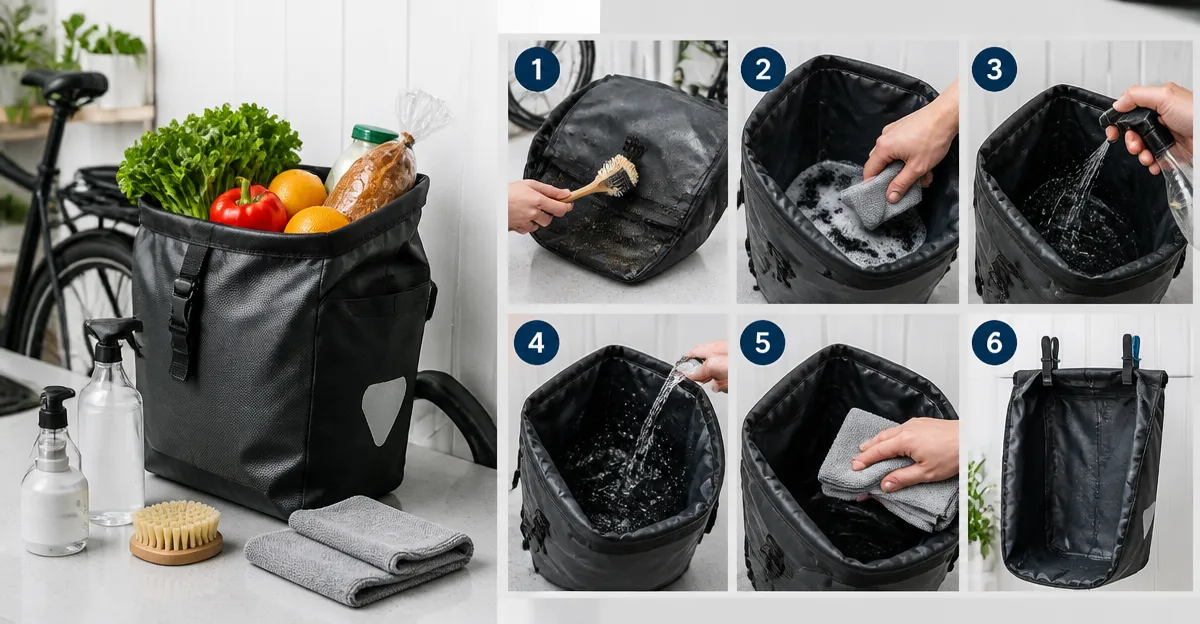
Before applying any chemical solution, one should eliminate visible dirt, food particles, and loose soil. Turn the pannier inside out and use a soft brush to dislodge debris from seams and pockets. For heavily soiled areas, a gentle hand wash with mild detergent can prevent the sanitizing chemicals from being diluted by residual grease. This preparatory action ensures that the subsequent sanitizer reaches the fabric fibers rather than merely cleaning surface grime.
Step 2: Prepare a Sanitizing Solution
One must follow the manufacturer's dosage instructions to achieve the correct concentration. For Steramine 1‑G Sanitizer Tablets, dissolve one tablet in one gallon of water; the solution will turn a distinct blue color, indicating proper strength. This concentration is sufficient for food‑contact surfaces and is approved by health authorities for commercial use. If a larger volume is required, the Steramine 600‑Count Sanitizer Tablets provide four bottles, each capable of treating 150 gallons, reducing the need for frequent tablet replacement.
The blue tint serves as a visual cue that the sanitizer has not been over‑diluted. Over‑dilution can compromise antimicrobial efficacy, while under‑dilution may leave residues that affect food taste. Use a clean measuring cup to ensure accuracy, and stir the solution gently to avoid excessive foam.
Step 3: Submerge and Soak the Pannier
Place the pannier fully into a clean bucket or basin containing the prepared solution. Ensure that the entire surface, including straps and seams, is immersed. One should allow the pannier to soak for at least five minutes; this contact time is required for the sanitizer to penetrate the fabric matrix and inactivate microorganisms such as E. coli, Listeria, and Staphylococcus aureus.
For rapid turnover, the Star San High‑Foam Sanitizer can be used as a no‑rinse spray. Apply the foam liberally, ensuring that the blue‑tinged solution covers all areas. The high‑foaming property helps the sanitizer reach crevices and textured surfaces, while the acid‑based formula provides rapid microbial kill within seconds. This method is especially useful when a full‑size soak is impractical.
Step 4: Rinse Thoroughly (If Required)
When using tablet‑based solutions, a clear rinse with potable water is recommended to remove any residual sanitizer that could affect food flavor. Rinse the pannier under a gentle stream, flipping it to rinse both sides. For the high‑foam sanitizer, a rinse is optional because the product is formulated as a no‑rinse solution; however, a quick splash can remove excess foam if desired.
One should verify that the rinse water is clear and free of bubbles, indicating that the sanitizer concentration has been reduced to safe levels. If a water test strip is available, testing for quaternary ammonium concentration can confirm compliance with recommended residual levels.
Step 5: Dry Completely
After rinsing, hang the pannier in a well‑ventilated area until it is completely dry. Moisture promotes microbial regrowth, so thorough drying is essential. If time is limited, a low‑heat setting on a dryer (no higher than 40 °C) can accelerate the process without damaging the fabric.
For quick disinfection of high‑touch areas, one may use PDI Sani‑Professional Wipes. These pre‑moistened wipes contain a quaternary ammonium compound that kills 99.999 % of common foodborne pathogens within 60 seconds. Wipe the straps, handles, and any surface that will be touched repeatedly during transport. The wipes are EPA‑registered, ensuring compliance with food‑safety regulations.
Tips & Pro Tips
- Always wear protective gloves when handling concentrated sanitizers to prevent skin irritation.
- Test the sanitizer concentration with QT‑10 test strips included in the 600‑count package; the target range is 200‑400 ppm for optimal efficacy.
- Store tablets in a cool, dry place away from direct sunlight to preserve potency.
- If the pannier is heavily stained, pre‑soak it in warm water with a mild detergent before applying the sanitizer.
- Label the bucket with the preparation date; the solution remains effective for up to 24 hours if stored in a sealed container.
Troubleshooting
- Solution does not turn blue: The tablet may have been damaged or expired. Use a fresh tablet and verify that the water temperature is between 20 °C and 30 °C.
- Residual odor after rinsing: Rinse the pannier with a larger volume of water or repeat the rinse step. The odor is typically caused by incomplete removal of the acid‑based sanitizer.
- Fabric discoloration: Avoid using bleach or harsh chemicals on colored panniers. Stick to the recommended sanitizers, which are formulated to be color‑safe.
Conclusion
One can maintain safe food transport by following a systematic cleaning routine that includes debris removal, proper sanitizing solution preparation, thorough soaking, appropriate rinsing, and complete drying. The optional products highlighted in this guide provide reliable antimicrobial performance, visual concentration cues, and convenient application methods. By integrating these tools with diligent practice, one safeguards family health and preserves the functionality of reusable grocery panniers.
Products Mentioned in This Guide
Frequently Asked Questions
Why should I sanitize reusable grocery panniers?
They can harbor soil, pesticide residues, and microbes that cause cross‑contamination of food.
What basic household items are needed to clean a pannier?
A bucket of clean water, mild detergent, a soft brush or non‑abrasive scrub pad, and protective gloves.
How often should I sanitize my grocery pannier?
Sanitize after each use for raw produce and at least once a week for regular shopping bags.
Can I use bleach to disinfect a fabric pannier?
Yes, a diluted bleach solution (1 tablespoon per gallon of water) works, but rinse thoroughly and air‑dry.
Are there commercial sanitizing products recommended for panniers?
Products like food‑grade sanitizing sprays or wipes with EPA‑approved disinfectants are effective and quick‑drying.