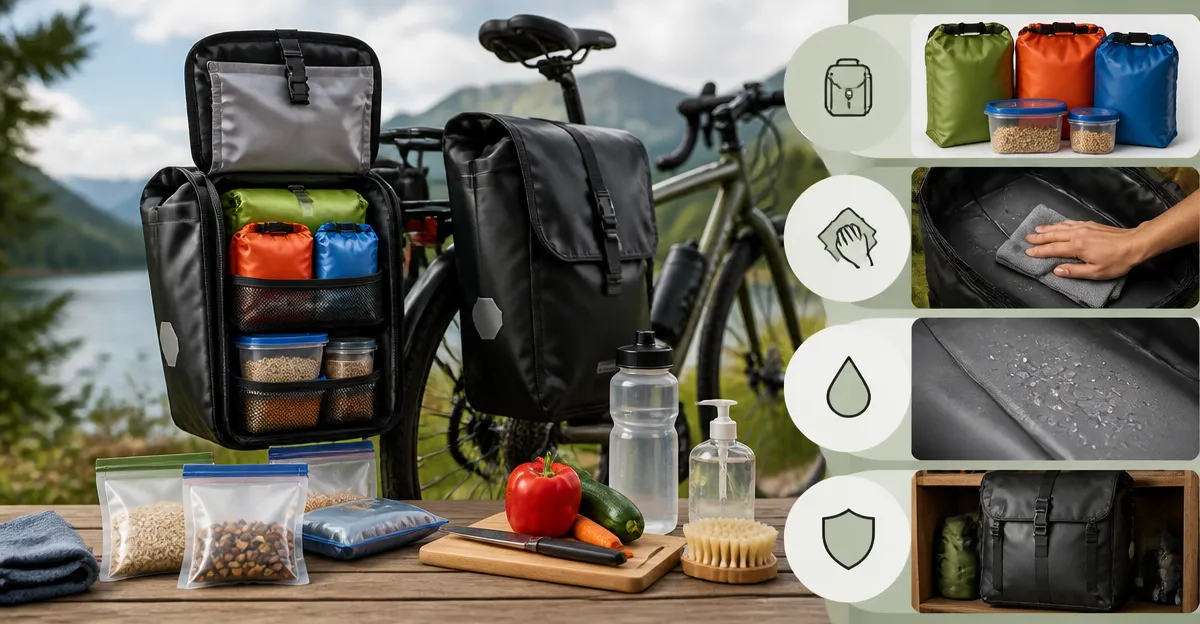
How to Prevent Cross-Contamination in Bike Panniers: Practical Packing, Cleaning, and Storage Tips for Safe Cycling
Introduction
Cyclists who transport groceries, snacks, or prepared meals often overlook the hygiene challenges associated with bike panniers. This guide explains how to prevent cross‑contamination, maintain food quality, and protect the pannier itself. Readers will learn systematic packing methods, effective cleaning procedures, and optimal storage practices. By following these recommendations, one can enjoy healthy meals on the road without compromising safety or equipment longevity.
What You’ll Need
- Two high‑quality panniers – one for food items, one for non‑food gear.
- Reusable food‑grade containers or zip‑lock bags.
- Microfiber cleaning cloths.
- Mild detergent or bike‑specific cleaning spray.
- Water‑resistant barrier liners (optional).
Both recommended panniers are available on Amazon and meet the criteria for durability, water resistance, and ease of installation.
Step 1: Choose the Right Pannier
Selecting a pannier that offers water resistance, secure mounting, and reflective safety features creates a solid foundation for hygienic transport. The ANCHOM Rear Bike Rack Bag provides an 8‑liter capacity, lightweight construction, and reflective strips for night visibility. Priced at $24.99 with a 4.4‑star rating from 224 reviews, it is ideal for short‑distance commutes where food items are limited in volume.
For longer rides or larger grocery loads, the Kinetrail Expandable Waterproof Panniers deliver 25‑35 L of expandable space, a waterproof PU‑coated fabric, and a robust mounting system. At $29.99 and a 4.5‑star rating from 41 reviews, these panniers protect contents from rain while offering ample room for separate food compartments.
Why these products matter: The ANCHOM bag’s compact size reduces the distance food travels from the rack to the rider’s hands, limiting exposure to dirt. The Kinetrail panniers’ waterproof membrane prevents moisture infiltration, a common source of bacterial growth in stored food.
Step 2: Separate Food from Non‑Food Items
Cross‑contamination often occurs when raw produce, meat, or dairy share space with tools, cleaning supplies, or oily clothing. Implement a strict segregation strategy:
- Designate one pannier exclusively for food. Use the ANCHOM bag for daily lunches or the larger Kinetrail bag for grocery trips.
- Place non‑food items such as repair kits, spare tubes, and clothing in the opposite pannier.
- Utilize internal pockets or external zippered compartments to create additional barriers.
Both recommended panniers include side zipper pockets and a hidden chest‑strap pocket, allowing quick access to utensils or a phone without opening the main compartment.
Step 3: Use Protective Barriers
Even with separate panniers, moisture or crumbs can migrate. Adding a removable liner creates a disposable barrier that can be washed after each ride.
- Choose food‑grade silicone bags or reusable containers that fit snugly within the pannier.
- Consider a thin, water‑resistant liner made from polyethylene; it slides into the pannier and can be rolled up for storage.
- Secure the liner with the ANCHOM bag’s top‑mounted tie‑rope to prevent shifting during motion.
The reflective strips on both panniers also serve a secondary safety function: they remind the rider to check the bag’s exterior for stray debris before sealing, reducing the risk of contaminating the interior.
Step 4: Clean the Pannier After Each Use
Regular cleaning eliminates residual food particles that attract bacteria. Follow this procedure after every ride that involved food transport:
- Remove all removable liners, containers, and zip‑lock bags.
- Wipe the interior with a microfiber cloth dampened with a mild detergent solution. Avoid harsh chemicals that could degrade the PVC Oxford material of the ANCHOM bag or the PU coating of the Kinetrail panniers.
- Rinse with a clean, damp cloth to remove soap residue.
- Leave the pannier open in a shaded, well‑ventilated area until completely dry. Direct sunlight can weaken the waterproof coating over time.
Both products are designed for easy cleaning; the ANCHOM bag’s smooth PVC surface wipes clean quickly, while the Kinetrail’s tear‑resistant fabric tolerates gentle scrubbing.
Step 5: Store the Pannier Properly
Proper storage prolongs the lifespan of the pannier and maintains its hygienic qualities.
- Store the bag in a dry indoor location, away from extreme temperatures.
- If space permits, keep the pannier loosely hanging to preserve its shape and prevent creasing of the waterproof membrane.
- Periodically inspect the sticker straps on the ANCHOM bag and the mounting hooks on the Kinetrail panniers for wear.
By adhering to these storage guidelines, one reduces the likelihood of mold growth and ensures that reflective strips remain effective for night riding safety.
Tips & Pro Tips
- Label the food pannier with a waterproof sticker that reads “Food Only.” This visual cue prevents accidental mixing.
- For perishable items, include a small insulated sleeve or a reusable ice pack that fits within the pannier’s interior.
- Rotate cleaning agents: a vinegar‑water solution can be used monthly to neutralize odors without harming the bag’s material.
- When riding in heavy rain, double‑check that the zipper pulls are fully engaged to maintain the water‑resistant seal.
- Consider attaching a small, detachable laundry bag to the ANCHOM bag’s top‑mounted rope for dirty clothing, keeping it separate from food.
Troubleshooting
| Problem | Possible Cause | Solution |
|---|---|---|
| Moisture inside the pannier after drying | Insufficient ventilation or residual water from cleaning | Leave the bag open in a breezy area for at least two hours; use a fan if indoor drying is necessary. |
| Food odors linger | Organic residue not fully removed | Apply a mixture of baking soda and water to the interior, let sit for 15 minutes, then wipe clean. |
| Reflective strips fading | Exposure to direct sunlight over long periods | Store the bag away from windows and replace the bag after several years of heavy use. |
Conclusion
Preventing cross‑contamination in bike panniers requires thoughtful product selection, disciplined packing, diligent cleaning, and careful storage. By using dedicated food panniers such as the ANCHOM Rear Bike Rack Bag or the Kinetrail Expandable Waterproof Panniers, cyclists can safeguard their meals, maintain equipment integrity, and ride with confidence. Implement the steps outlined in this guide, and one will experience healthier journeys and longer‑lasting pannier performance.
Products Mentioned in This Guide
Frequently Asked Questions
How can I keep food separate from non‑food items in bike panniers?
Use two dedicated panniers—one solely for food—and store food in sealed, food‑grade containers or zip‑lock bags.
What type of liner helps prevent cross‑contamination and moisture?
A water‑resistant barrier liner placed inside the food pannier protects against spills and keeps the bag dry.
How often should I clean my bike panniers after transporting food?
Clean the pannier after each food trip with a mild detergent or bike‑specific spray and a microfiber cloth.
Can I reuse the same containers for different meals without risk?
Yes, if the containers are washed and fully dried between uses, they remain safe for multiple meals.
What storage method preserves pannier hygiene when not in use?
Store the empty panniers in a cool, dry place with the lids open to allow airflow and prevent odors.