
Introduction
Delivering frozen groceries by bicycle presents a unique set of challenges. The rider must maintain a stable temperature while navigating traffic, weather fluctuations, and varying delivery distances. This guide explains how to use phase‑change materials (PCM) together with purpose‑built insulated carriers to preserve frozen items from the moment they leave the freezer until they reach the customer. By following the steps, one can achieve reliable temperature control, reduce spoilage, and enhance customer satisfaction.
The reader will learn how to select appropriate PCM packs, pre‑freeze them efficiently, arrange frozen products for optimal airflow, secure the insulated carrier to a bike, and monitor conditions during transit. The information is valuable for independent couriers, small‑scale grocery services, and anyone seeking a professional approach to cold‑chain delivery on two wheels.
While the guide recommends specific tools, the principles apply regardless of the equipment used. Understanding the why behind each recommendation enables one to adapt the process to different budgets or local product availability.
What You'll Need
- Phase‑change material packs (gel or salt‑based) sized for the intended load.
- Insulated delivery carrier – either the TooCust Insulated Food Delivery Bag or the Acshio Insulated Delivery Backpack.
- Reusable zip‑lock bags or vacuum‑seal bags for individual grocery items.
- Reflective safety vest and lights for night deliveries.
- Thermometer or temperature‑monitoring app compatible with Bluetooth sensors (optional but recommended).
Step 1: Prepare Your PCM Packs
Phase‑change materials absorb heat as they melt, keeping the surrounding environment at a near‑constant temperature. Select PCM packs that melt at a temperature slightly below the freezing point of the groceries you intend to transport (typically 0 °C or 32 °F). Gel packs are lightweight and easy to handle, while salt‑based packs often provide longer melt times.
Measure the interior volume of the carrier you will use. The TooCust bag offers a 40 L capacity, which can hold up to seven 10‑inch pizza boxes; the Acshio backpack provides a 15 L volume. Allocate roughly 30 % of the total volume for PCM packs to ensure sufficient thermal mass without crowding the food.
For a typical 10 kg frozen grocery order, three to four medium‑size gel packs (each about 1 L) will usually maintain the desired temperature for up to two hours.
Step 2: Pre‑Freeze PCM Packs
Place the PCM packs in a standard freezer for at least eight hours, or until they are completely solid. For faster preparation, arrange the packs in a single layer on a tray to promote uniform cooling.
Label each pack with the intended melt temperature. This practice helps you verify that the correct packs are used for each delivery, especially when you carry both 0 °C and –20 °C packs for different product lines.
If you anticipate multiple deliveries in a single shift, consider a small portable freezer or a cooler with dry ice to keep additional packs frozen between runs.
Step 3: Organize Frozen Grocery Items
Pack individual items in reusable zip‑lock bags to prevent moisture leakage. Place the heaviest items at the bottom of the carrier to maintain stability and lower the center of gravity, which is critical for safe bike handling.
Arrange the frozen items so that air can circulate around each package. Do not stack items directly on top of each other; instead, create a grid‑like pattern, leaving small gaps for cold air to flow.
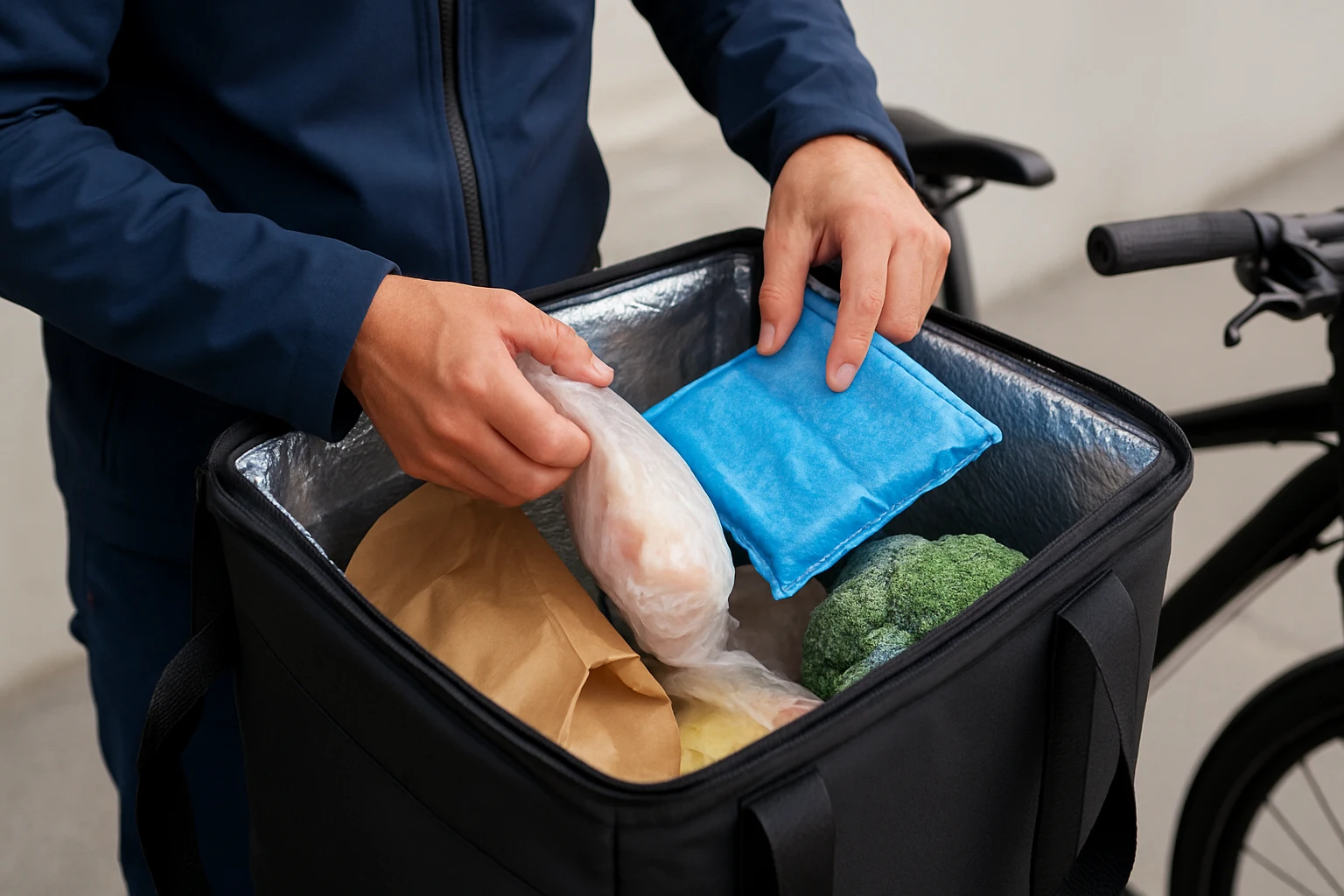
Insert the pre‑frozen PCM packs into the carrier’s dedicated compartments. The TooCust bag includes an adjustable divider and a transparent PVC pocket that can hold PCM packs while allowing you to view their condition. The Acshio backpack features side cup holders that can be repurposed to store slim PCM packs securely.
Step 4: Load the Insulated Carrier
When loading the carrier, follow these guidelines:
- Place PCM packs against the internal frame or bottom plate first. The TooCust bag’s lightweight fiberglass frame and removable bottom plate provide a stable base that prevents the bag from collapsing under weight.
- Layer frozen groceries on top of the PCM packs, using the divider to separate hot‑ready items from frozen ones if necessary.
- Close the carrier using the high‑quality Velcro fasteners. Velcro offers quicker access than zippers, which is essential during rapid order turnover.
- Activate the reflective strip on the carrier’s exterior. Both the TooCust bag and the Acshio backpack feature reflective strips that improve visibility during low‑light conditions, enhancing rider safety.
Product details for reference:
- TooCust Insulated Food Delivery Bag – Price: $39.99, Rating: 4.5/5 (304 reviews). Features include a metal fixing base for bike or motorcycle attachment, three‑layer insulation, and a self‑standing frame.
- Acshio Insulated Delivery Backpack – Price: $26.99, Rating: 4.6/5 (86 reviews). Features include 600 D oxford exterior, pearl‑cotton and aluminum foil interior, four side cup holders, and padded shoulder straps.
Step 5: Secure the Carrier to Your Bike
Both carriers provide mounting options. The TooCust bag includes a metal fixing base that can be bolted to the rear rack of a bicycle, electric bike, or motorcycle. This fixed installation prevents the bag from swinging, which could disturb the PCM packs and reduce insulation efficiency.
If you prefer a backpack style, attach the Acshio bag to the bike’s rear rack using its sturdy shoulder straps, or wear it on your back for shorter routes. The padded back panel distributes weight evenly, reducing fatigue during long deliveries.
Ensure the carrier is locked in place before departure. A loose bag can shift, causing uneven temperature zones and increasing the risk of spills.
Step 6: Monitor Temperature During Transit
Use a compact Bluetooth thermometer placed near the PCM pack to track real‑time temperature. Many riders set alerts for when the temperature rises above a safe threshold (e.g., –2 °C for frozen items).
If the temperature approaches the limit, consider pulling over to a shaded area, opening the carrier briefly to allow airflow, or swapping a partially melted PCM pack with a fresh frozen one from a portable cooler.
At the end of each delivery, record the temperature log. Over time, this data helps you refine the number of PCM packs required for different route lengths and ambient conditions.
Tips & Pro Tips
- Plan routes to minimize exposure to direct sunlight. Even the best insulated bags lose efficiency under intense UV radiation.
- Use a bike basket or pannier in conjunction with the insulated bag to distribute weight evenly across the frame.
- Carry a small spare PCM pack in a waterproof pouch; it can be swapped mid‑shift if a pack fully melts.
- When delivering to multiple addresses, group orders by distance and temperature sensitivity to avoid unnecessary exposure.
- Clean the interior of the carrier after each shift. Residual moisture can reduce insulation performance over time.
Troubleshooting
- Problem: Frozen items thaw faster than expected.
Solution: Verify that PCM packs are fully frozen before loading. Check that the Velcro closure is sealed and that the reflective strip is not obstructed, which could indicate a compromised seal. - Problem: Carrier collapses under load.
Solution: Ensure the internal fiberglass frame of the TooCust bag is correctly assembled. For the Acshio backpack, do not exceed the recommended 15 L capacity; distribute weight across both shoulder straps. - Problem: Excessive moisture inside the bag.
Solution: Use waterproof zip‑lock bags for each grocery item and dry‑wipe the interior after each delivery to prevent ice buildup.
Conclusion
By integrating phase‑change materials with a purpose‑built insulated carrier, one can reliably deliver frozen groceries on a bicycle while maintaining product integrity and rider safety. The guide has outlined the preparation of PCM packs, optimal packing techniques, secure mounting methods, and real‑time monitoring strategies. Implementing these steps reduces waste, improves customer trust, and positions the rider as a professional cold‑chain specialist.
One is encouraged to experiment with pack quantities, route planning, and temperature‑logging tools to fine‑tune the process for specific business needs.
Products Mentioned in This Guide
Frequently Asked Questions
What type of phase‑change material (PCM) packs are best for bike‑delivered frozen groceries?
Choose PCM packs that melt at the same temperature range as the frozen items (typically -18 °C to -10 °C) and that fit the dimensions of your insulated carrier.
How should PCM packs be pre‑frozen before a delivery run?
Place the PCM packs in a flat freezer tray for at least 4–6 hours, or overnight, until they are fully solidified and at the same temperature as the groceries.
What is the optimal way to arrange frozen products inside the insulated carrier for airflow?
Stack items in a single layer with a small gap between them and the carrier walls, allowing cold air to circulate evenly around each product.
How can I securely attach an insulated carrier to my bike without compromising temperature control?
Use sturdy straps or a dedicated rack mount that holds the carrier tightly yet leaves the carrier’s seals intact, preventing gaps that let warm air in.
What simple methods can I use to monitor temperature during a bike delivery?
Attach a compact, battery‑powered temperature logger or a Bluetooth sensor to the carrier and check readings via a smartphone app before and after the ride.
