Introduction
The modern commuter cyclist seeks equipment that is both functional and responsible to the environment. This guide explores eco‑friendly materials used in bicycle cargo gear and explains how they influence durability, performance, and sustainability. Readers will learn the science behind recycled fabrics, water‑resistant treatments, and low‑impact manufacturing processes. In addition, the guide presents a curated product recommendation that exemplifies these principles.
Background and Context
Traditional bicycle panniers and racks have relied on virgin plastics, heavyweight metals, and chemically intensive waterproofing. Such materials often generate significant carbon emissions during production and may persist in landfills for decades. Recent advances have introduced recycled polyester (rPET), bio‑based polymers, and aluminum alloys that retain strength while reducing ecological footprints. Understanding these developments is essential for making informed purchasing decisions.
Recycled polyester is created from post‑consumer plastic bottles that are cleaned, shredded, and re‑spun into fibers. The resulting fabric, commonly labeled 600D rPET, offers comparable abrasion resistance to virgin polyester but consumes up to 60 % less energy. Water‑resistant coatings derived from durable water repellent (DWR) chemistry can be applied without fluorinated compounds, further lowering environmental impact.
Sustainable Materials for Panniers, Bags, and Racks
Three material categories dominate the sustainable cargo‑gear market:
- Recycled Polyester (rPET) – Provides water resistance, lightweight feel, and high tensile strength. Ideal for everyday commuter bags.
- Aluminum and Recycled Steel – Offers corrosion resistance and structural integrity for bike racks while being fully recyclable at end of life.
- Bio‑Based Plastics and Natural Fibers – Emerging options such as hemp‑reinforced composites deliver rigidity with minimal petrochemical use.
When evaluating a product, consider the percentage of recycled content, the presence of harmful finishes, and the recyclability of the entire assembly.
Product Recommendation
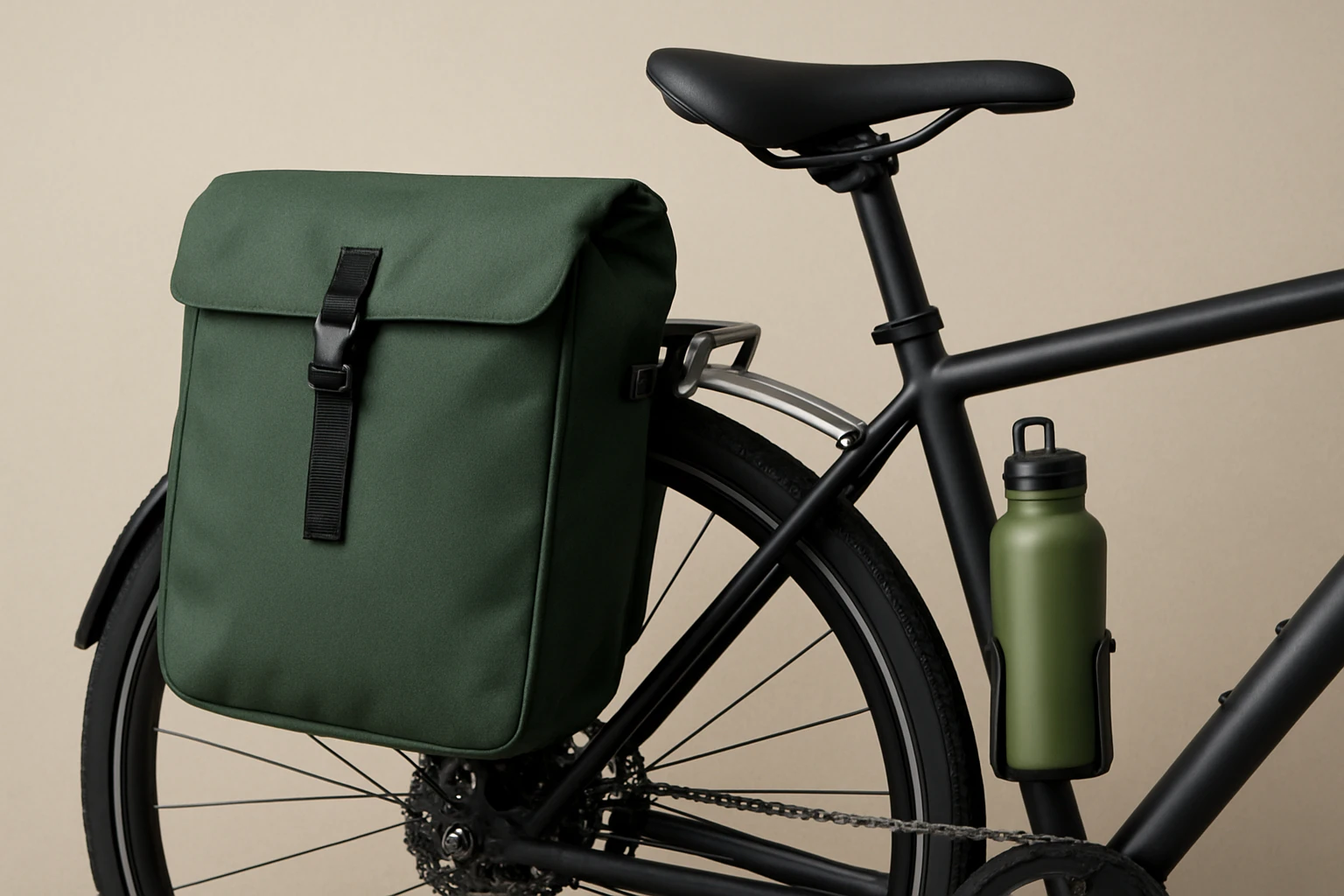
The Retrospec Waterproof Bike Pannier Bag illustrates how recycled polyester can be integrated into a high‑performance commuter solution. This pannier features a 600D rPET exterior, a reflective rain cover, and a padded laptop compartment. Its dimensions of 17 × 13.75 × 9 inches provide ample space for work supplies and grocery items. The bag attaches securely to most rear racks and converts to a messenger style with an included shoulder strap, offering versatility for multimodal travel.
Key specifications include:
- Material: 600D recycled PET fabric
- Waterproof rating: Includes reflective rain cover
- Capacity: 17 × 13.75 × 9 inches
- Compatibility: Fits standard rear racks, quick‑release mounting
- Price: $59.99
- Rating: 4.4 out of 5 stars from 25 reviews
These attributes align with the guide’s emphasis on durability, sustainability, and functional design.
Comparison and Selection Guide
Choosing the appropriate cargo gear requires balancing environmental goals with practical needs. The following matrix compares common material choices across critical criteria.
| Criteria | Recycled Polyester (rPET) | Aluminum Rack | Bio‑Based Plastic |
|---|---|---|---|
| Weight | Lightweight, ideal for daily commuting | Moderate, adds stability | Variable, often comparable to rPET |
| Water Resistance | Inherent, enhanced with DWR coating | Not applicable | Depends on formulation |
| Durability | High abrasion resistance | Excellent structural durability | Emerging, improving with research |
| Eco‑Impact | Up to 60 % energy savings versus virgin polyester | Fully recyclable, low embodied carbon | Low petrochemical use, biodegradable options |
| Cost | Mid‑range ($50‑$80 for panniers) | Mid‑range to high ($70‑$150 for racks) | Currently premium |
For cyclists prioritising a balance of sustainability and affordability, a rPET pannier such as the Retrospec model offers an optimal solution. Riders who require maximum load capacity and rigidity may prefer an aluminum rack paired with a complementary rPET bag.
Best Practices and Tips
To maximise the lifespan of eco‑friendly cargo gear, consider the following practices:
- Apply a gentle cleaning routine using mild soap and cold water; avoid harsh detergents that degrade DWR coatings.
- Reapply a non‑fluorinated water‑repellent spray annually to maintain waterproof performance.
- Store the bag in a shaded, dry location when not in use to prevent UV‑induced degradation.
- Inspect mounting hardware on racks regularly for wear and tighten bolts to manufacturer specifications.
- When the product reaches the end of its usable life, separate metal components for recycling and locate textile recycling programs for rPET fabrics.
Frequently Asked Questions
- What does the “600D” specification indicate?
- It refers to the denier, a measure of fiber thickness; 600D fabric is robust yet lightweight, suitable for commuter panniers.
- Is the reflective rain cover permanently attached?
- The cover folds into a compact pocket and can be deployed when rain is expected, providing visibility and protection.
- Can the bag accommodate a 15‑inch laptop?
- Yes, the padded sleeve is designed for laptops up to 15 inches, offering cushioning against impacts.
- How does rPET compare to virgin polyester in terms of strength?
- Recycled polyester retains comparable tensile strength and abrasion resistance while requiring less energy to produce.
- Are there any maintenance concerns specific to aluminum racks?
- Aluminum may develop surface oxidation over time; a simple wipe with a non‑abrasive cleaner restores appearance without affecting performance.
Conclusion
Eco‑friendly materials have transformed bicycle cargo gear, delivering performance that rivals conventional products while reducing environmental impact. By understanding the properties of recycled polyester, aluminum, and emerging bio‑based plastics, cyclists can select equipment that aligns with both functional requirements and sustainability values. The Retrospec Waterproof Bike Pannier Bag exemplifies how recycled fabrics can be combined with thoughtful design to create a versatile, durable, and affordable commuter solution.
Products Featured in This Guide
Retrospec Waterproof Bike Pannier Bag
Price: $59.99
Rating: 4.4 out of 5 stars (25 reviews)
Featured because it combines 600D recycled PET construction, a waterproof rain cover, and versatile conversion to a messenger bag, embodying the guide’s focus on sustainable yet practical cargo solutions.