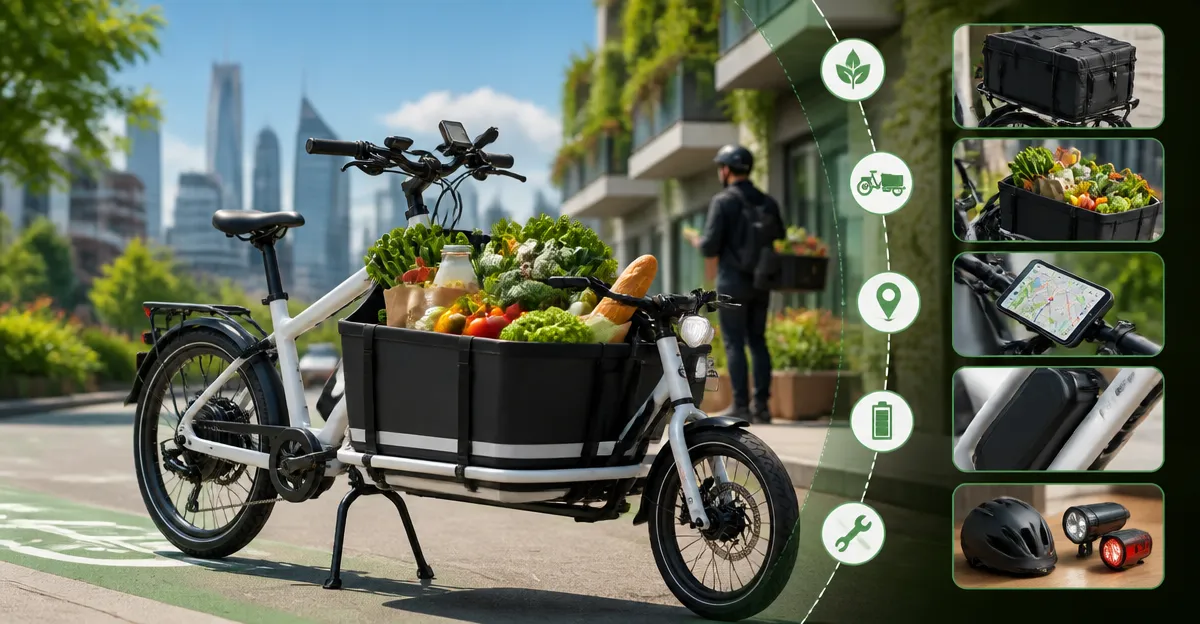
The Complete Guide to Zero‑Emission Last‑Mile Grocery Bike Setups: Cargo Bike Designs, Gear & Route Strategies
Introduction
Urban grocery delivery is evolving toward sustainable, zero‑emission solutions that reduce traffic congestion and carbon footprints. This guide explains how cyclists can transform a standard bike into a reliable grocery carrier, covering cargo designs, essential gear, and route optimization techniques. Readers will learn to evaluate cargo accessories, select the most suitable products, and adopt best‑practice habits for safe, efficient deliveries. By the end of the guide, one will be equipped to build a cost‑effective, environmentally friendly last‑mile delivery system.
Background & Context
Zero‑emission delivery relies on human power or electric assist, eliminating tailpipe emissions while providing flexibility in dense city cores. The concept gained traction as municipalities incentivize micro‑mobility and restrict diesel vans from low‑emission zones. Key factors influencing a successful grocery bike setup include load capacity, stability, weather protection, and quick‑release mechanisms for rapid loading and unloading. Understanding these fundamentals helps cyclists match equipment to the specific demands of grocery transport, whether for a solo rider or a small fleet.
Designing the Cargo Bike Setup
Two primary cargo configurations dominate the market: rear‑mounted trailers and bike‑mounted racks or baskets. Each offers distinct advantages in terms of load distribution, maneuverability, and storage when the bike is not in use. The following subsections explore these configurations, recommend products that excel in real‑world tests, and explain how to integrate them into a cohesive delivery system.
Rear‑Mounted Trailers
A trailer isolates cargo from the bike frame, preserving handling characteristics even with heavy loads. The VEVOR Bike Cargo Trailer stands out for its 160 lb capacity, industrial‑grade steel frame, and foldable design that fits in a car trunk when not in use. Its 16" x 1.75" tires provide smooth rolling on pavement, gravel, and sand, while gold‑colored reflectors increase nighttime visibility. Users praise the quick‑release wheel pins and the universal hitch that attaches easily to bikes with quick‑release rear wheels. At a price of $108.90 and a 4.5‑star rating from 897 reviews, it balances durability with affordability.
When selecting a trailer, consider the typical grocery weight (often 30‑70 lb) and the need for weather protection. The VEVOR model lacks a built‑in cover, so pairing it with a waterproof tarp is advisable for rainy climates. Additionally, ensure the bike’s rear axle can accommodate the hitch without interfering with disc brakes.
Bike‑Mounted Racks and Baskets
Racks attach directly to the bike’s seat tube or rear triangle, keeping the cargo close to the center of gravity. This configuration improves maneuverability in tight urban streets but limits maximum load compared to a trailer. The ANGGOER Bike Rack with Basket offers a 165 lb rating, a detachable aluminum basket of roughly 18 liters, and a free elastic bungee cord plus waterproof cover. Its quick‑release clip simplifies installation, and the adjustable height accommodates seat tubes up to 34 mm. Priced at $56.99 with a 4.1‑star rating from 565 reviews, it delivers a versatile cargo solution for medium‑weight grocery runs.
For riders who prefer a hard‑shell pannier, the JXFUKAL Bike Rear Rack Bag provides a waterproof EVA shell, 9.5 L capacity, and reflective panels for safety. Its dual‑buckle mounting system secures the bag to most rear racks, and the included shoulder strap allows the bag to double as a portable tote. At $37.99 and a 4.6‑star rating from 1,971 reviews, it offers a compact, weather‑resistant option for commuters who need to protect delicate items like groceries or electronics.
Heavy‑duty riders who regularly haul bulk items may opt for the YONTUO Heavy Duty Bike Rack. With a staggering 310 lb capacity, TIG‑welded aluminum construction, and an adjustable fender, it can support multiple panniers, grocery bags, or even small appliances. The large reflector enhances night‑time visibility, and the rack includes a quick‑release clamp for easy removal. Though priced at $39.99, its 4.3‑star rating from 437 reviews reflects strong value for users who need maximum load without a trailer.
For cyclists seeking a simple, open‑frame basket, the CXWXC Rear Bike Basket provides a spacious 12" × 17.7" × 8" cargo area, reinforced 3 mm steel wire, and a waterproof cover. Its design allows attachment to any standard rear rack, making it a flexible addition for grocery runs, pet transport, or picnic supplies. At $35.17 and a 4.6‑star rating from 469 reviews, it delivers high capacity at a low price point.
Comparison & Selection Guide
Choosing the right cargo solution depends on three core criteria: load capacity, storage convenience, and weather resilience. The table below summarizes the five featured products against these criteria.
| Product | Capacity | Weather Protection | Installation Ease | Price (USD) |
|---|---|---|---|---|
| VEVOR Bike Cargo Trailer | 160 lb | No built‑in cover (requires tarp) | Medium – hitch and wheel pins | $108.90 |
| ANGGOER Bike Rack with Basket | 165 lb | Waterproof cover included | Easy – quick‑release clip | $56.99 |
| JXFUKAL Bike Rear Rack Bag | 9.5 L (~10 lb max) | Waterproof EVA shell + rain cover | Very easy – buckles & velcro | $37.99 |
| YONTUO Heavy Duty Bike Rack | 310 lb | Adjustable fender, but no full cover | Easy – quick‑release clamp | $39.99 |
| CXWXC Rear Bike Basket | Large open basket (≈18 L) | Waterproof cover included | Easy – clamps to rear rack | $35.17 |
For riders who prioritize maximum load without sacrificing bike handling, the YONTUO rack or VEVOR trailer are the best choices. If budget and simplicity are paramount, the CXWXC basket provides ample space for everyday groceries. When a blend of protection and moderate capacity is needed, the ANGGOER rack with its built‑in cover or the JXFUKAL hard‑shell bag are ideal.
Best Practices & Tips for Efficient Grocery Deliveries
- Plan Loads by Weight and Shape: Distribute heavy items (canned goods, water bottles) low and centered to maintain stability.
- Secure Cargo with Bungee Cords or Netting: Both the ANGGOER and CXWXC kits include elastic straps that prevent shifting during sudden stops.
- Use Reflective Elements: Gold spokes on the VEVOR trailer, the large reflector on the YONTUO rack, and the reflective panels on the JXFUKAL bag improve visibility in low‑light conditions.
- Weather‑Proof Your Load: Combine waterproof covers with a rain‑proof tarp for the trailer; the JXFUKAL bag already includes a PU‑coated shell.
- Maintain Your Gear: Tighten all bolts after the first few rides; rust‑resistant finishes on VEVOR and YONTUO reduce corrosion.
- Optimize Routes: Choose bike‑friendly streets, avoid steep hills when carrying full loads, and use navigation apps that highlight dedicated bike lanes.
- Leverage Electric Assist: If using an e‑bike, set the motor to a moderate level to conserve battery while still handling heavy cargo.
Frequently Asked Questions
- Can I attach a trailer to an e‑bike with a disc brake? Yes, provided the hitch does not interfere with the disc rotor. The VEVOR trailer’s universal hitch works with most quick‑release rear axles; for disc brakes, verify clearance before installation.
- What is the difference between a basket and a pannier? A basket sits on top of a rear rack, offering open access and easy loading, while a pannier hangs on either side of the rack, providing enclosed protection and often larger combined capacity.
- How do I prevent cargo from shifting on hills? Use the included bungee cords, tighten the basket’s side clamps, and place the heaviest items low and centered. The YONTUO rack’s enlarged side wings also help keep panniers from contacting the spokes.
- Is the VEVOR trailer foldable enough for car transport? Yes, the frame folds flat and the wheels detach with two pins, allowing the entire trailer to fit in a standard sedan trunk.
- Can I use the CXWXC basket on a folding bike? The basket clamps to a standard rear rack; however, folding bikes often lack a compatible rear rack, so it is not recommended unless a compatible rack is installed.
- Do I need a separate lock for the cargo? While most racks include reflective elements, securing the cargo with a lock or cable is advisable for high‑value items. The JXFUKAL bag’s top pocket can hold a small lock for quick access.
- How often should I inspect the bolts on a heavy‑duty rack? Inspect after the first 10 rides, then monthly thereafter. Tighten any loose bolts to maintain structural integrity, especially on the YONTUO rack where side‑wing bolts can settle.
Conclusion
Zero‑emission grocery delivery on a bike is a practical, cost‑effective, and environmentally responsible solution for modern cities. By understanding cargo dynamics, selecting the appropriate trailer or rack, and following best‑practice loading and route strategies, cyclists can achieve reliable, safe, and efficient deliveries. The products highlighted in this guide—VEVOR, ANGGOER, JXFUKAL, YONTUO, and CXWXC—represent a spectrum of capacities and price points, ensuring that every rider can find a fit that matches their operational needs.
Implementing these recommendations will reduce emissions, lower operating costs, and enhance customer satisfaction through timely, fresh deliveries. As urban logistics continue to shift toward micro‑mobility, mastering the art of the zero‑emission grocery bike setup positions one at the forefront of sustainable commerce.
Products Featured in This Guide
VEVOR Bike Cargo Trailer
Price: $108.90 | Rating: 4.5/5 (897 reviews)
Featured for its 160 lb capacity, foldable design, and sturdy steel frame, making it ideal for heavy grocery loads and multi‑bike families.
ANGGOER Bike Rack with Basket
Price: $56.99 | Rating: 4.1/5 (565 reviews)
Chosen for its detachable 18‑liter basket, built‑in waterproof cover, and quick‑release installation that suit medium‑weight grocery trips.
JXFUKAL Bike Rear Rack Bag
Price: $37.99 | Rating: 4.6/5 (1,971 reviews)
Highlighted for its waterproof hard shell, reflective panels, and versatile shoulder strap, perfect for protecting delicate grocery items.
YONTUO Heavy Duty Bike Rack
Price: $39.99 | Rating: 4.3/5 (437 reviews)
Featured for its 310 lb capacity, adjustable fender, and robust aluminum construction, catering to riders who need to haul bulk groceries or equipment.
CXWXC Rear Bike Basket
Price: $35.17 | Rating: 4.6/5 (469 reviews)
Selected for its large open‑frame design, waterproof cover, and easy‑install clamps, offering a budget‑friendly solution for everyday grocery transport.